In The Garden
Pacific Northwest Native Americans and Salal
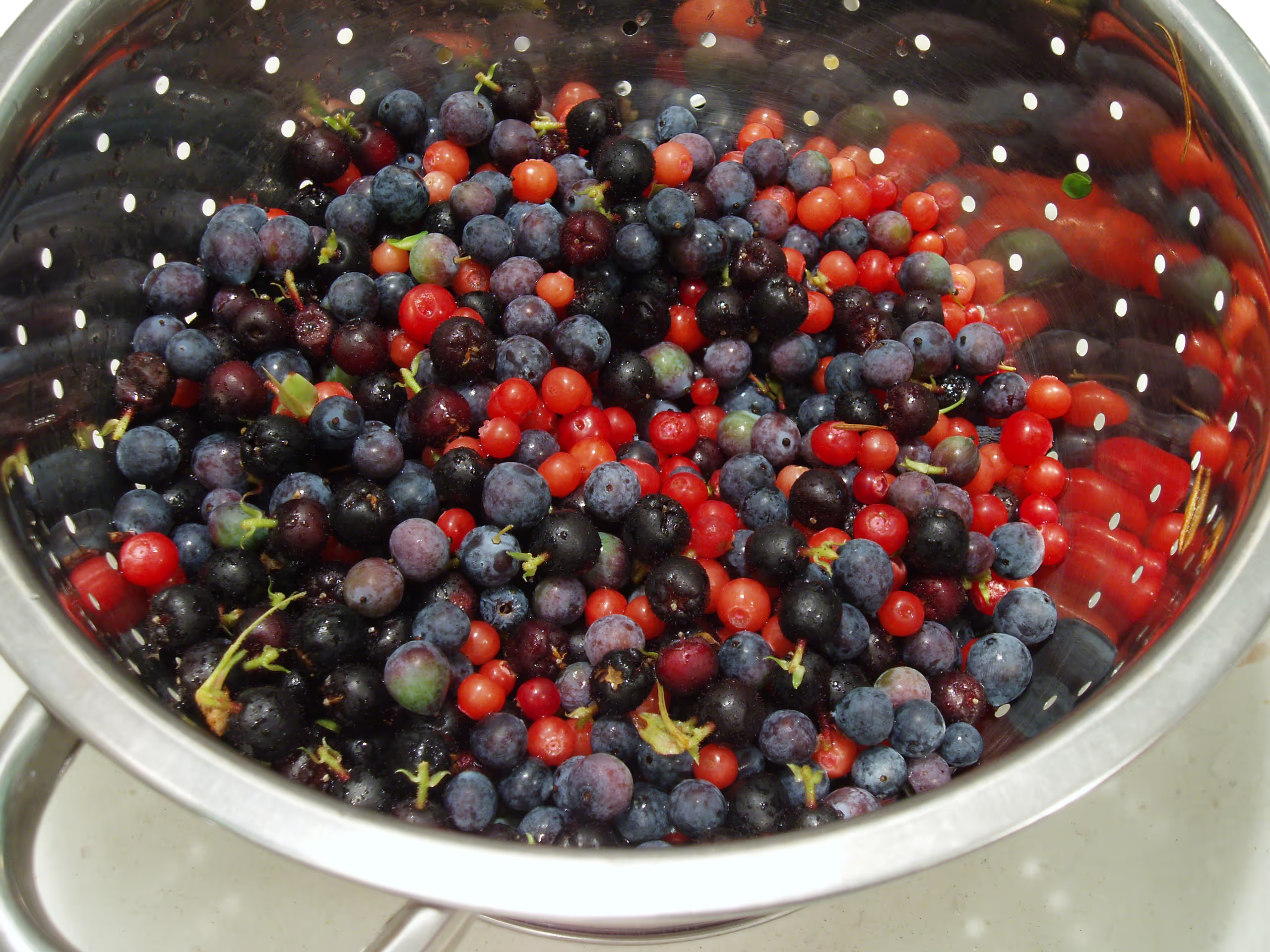
A few weeks ago, we posted about one of the most common and interesting plants in Ocean Shores. In case you missed it, you may read it here. As promised, this posting gives insights into the many ways the Pacific Northwest Native Americans used salal. Known as “ethnobotany,” (the scientific study of the traditional knowledge and customs of a people concerning plants and their medical, religious, and other uses) gives us a better understanding of the cultures of those Native American tribes.
There were five basic Native American languages spoken in the Pacific Northwest, each group had many smaller tribes. Because their specific living locations and types of travel within the Pacific Northwest varied, they had similar and dissimilar relationships to the edible plants around them.
Food
Of course, as a commonly found shrub with many berries, salal was a primary food source served and preserved in a wide variety of ways. Native Americans knew salal was good for them and science now shows salal berries are powerhouses of antioxidants with higher levels than most other berries. They have approximately five times the amount of tannins found in blueberries and 1.5 times more anthocyanins!
Lewis and Clark’s journals tell us Native Americans favored salmonberry (Rubus spectabilis), thimbleberry (Rubus parviflorus) and wild strawberry (Fragaria chiloensis) over salal, but they ate those berries fresh because they were too soft to dry. Preserving salal berries for winter consumption ensured a healthy intake of nutrition during the long winter. Lewis and Clark also recorded some roots were eaten and others preserved in the summer for winter use.
Many tribes including the Haida, Hanaksiada, Karok, Kitasoo, Southern Kwakiuti, Makah, Nitinaht and others would mash or boil the berries, then form “cakes” to dry on cedar boards or skunk cabbage leaves placed on long racks. When full, they dried in the sun or over a slow fire and stored in wooden boxes. Erma Gunther in “The Ethnobotany of Western Washington,” noted the Lower Chinook People made salal loaves weighing 10-15 lbs.! Many tribes, including the Clallam and Klallam reconstituted the loaves by dipping into water, whale, seal, or eulachon oil.
Some tribes such as Southern Kwakiuti dipped the fresh berries in oil before eating at feasts.
The Makah and Hesquiat layered branches with leaves between fish heads and fish for flavoring and to prevent sticking. Along with Oweekeno, they also used the branches with leaves as beaters to froth soapberries. Branches and leaves in Nitinaht steam pits intensified flavors and help circulate the steam.
Other preparations included salal jam, fruit leather, “pies” and in mixtures with other berries, fish, leaves and meat.
Dyes
The Karoks made black dye with the berry juice. An infusion of the leaves created a yellow dye.
Medicial

Salal was almost a cure-all!
Native Americans prepared salal in many ways, dependent upon the use. Three methods of extraction included tea, infusion, and decoction. “Tea” is from steeping soft leaves or flowers in hot water. An “infusion” is more potent and uses more woody stems and/or bark, steeping in boiling water for a longer time than tea. A “decoction” is stronger and made by boiling the infusion until only half of the original water remains, thus concentrating the potion.
These preparations helped with gastrointestinal issues. An infusion from the leaves soothed Nitinaht stomach aches, chewing the leaves helped Quinault heartburn and colic. Quinaults also created a decoction of leaves for diarrhea.

The Samish and Swinomish used infusions for coughs and tuberculosis. Newly married Nitinaht brides and grooms chewed large leaves to ensure the first child would be a son!
The Makah used leaves to dry the mouth to offset thirst.
All species with the Ericaceae family possess gallic and tannic acids which are useful for soothing burns. The Klallam chewed the leaves to make a poultice to apply to burns and the Quileute also applied the poultice to sores. The Bella Coola toasted and pulverized the leaves to apply to cuts.
Other Uses
Tobacco didn’t grow in the Pacific Northwest. The Makah dried and pulverized salal and kinnikinnick leaves then combined them to smoke.
The Hesquiat and Makah folded large leaves like a cone to create a small drinking vessel.
Closing Thoughts
By the time Lewis and Clark reached Astoria in 1805, two waves of diseases had decimated the American Native populations. The first was in 1750, the second was from smallpox in 1782-83. While Lewis and Clark recorded invaluable information about the various cultures and their practices, it is probable we do not know all the uses of salal.
If you are interested in learning more about ethnobotany, there is an extensive ethnobotany data base at http://naeb.brit.org/. It allows searches by plant, uses or tribes. Many other sites are also available to learn more about this fascinating science as well as many books such as “Ethnobotany of Western Washington, the Knowledge and Use of Indigenous Plants by Native Americans,” by Erna Gunther.
© Jacqui Austin, August 2020
Touch whale bones, examine shipwreck artifacts and connect with the coast's living history.

Support our mission, get involved in educational programs, or contribute through donations and volunteering.