In The Garden
Surprisingly Interesting Salal

After three years of exploring and filling journals with descriptions of new plants and animals and accounts of meeting indigenous people, Meriweather Lewis and William Clark finally arrived at the mouth of the Columbia River. On February 8, 1803, they made the first entry about Gaultheria shallon, now commonly called salal. The Chinook word “kl-kwu-shá-la” for the plant gave rise to the common and species names. While their spelling seems odd to us, their description of the plant was nearly correct:
“The Shallon is the production of a shrub which I have heretofore taken to be a species of loral and mentioned as abounding in this neighbourhood and that the Elk fed much of its leaves. It generally rises to the hight of 3 feet but not unusually attains to that of 5 feet. It grows very thick and is from the size of a goos quill to that of a man’s thumb, cylindrical, the bark of the older or larger part of the stock is of a reddish brown colour while that of the younger branches and succulent shoots are red where most exposed to the sun and green elsewhere...”
Salal Description
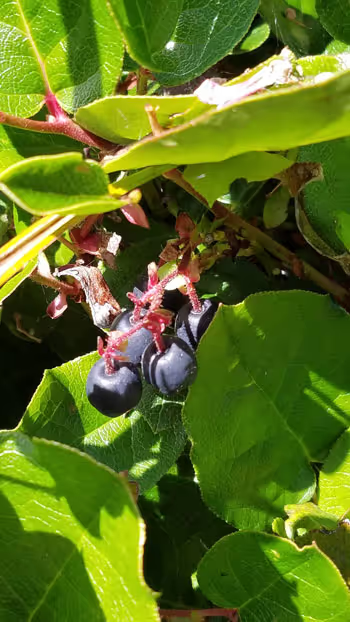
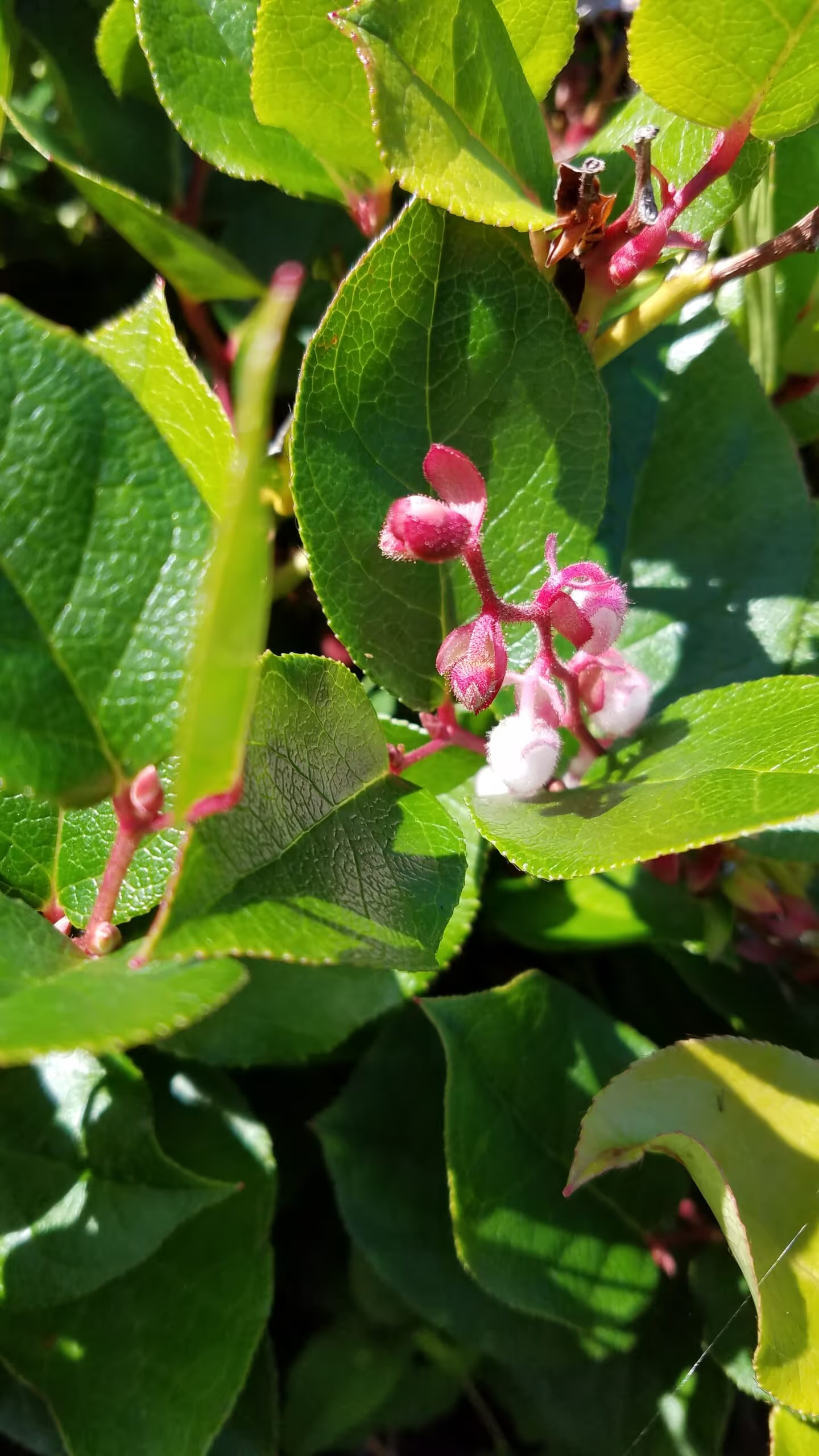
Salal is in the heather (Ericaceae) family along with cranberry, blueberry, huckleberry, rhododendron, and many other well-known Pacific Northwest plants. The 5-15 characteristic bell, or urn-shaped, pinkish white flowers found at branch ends, are representative of this family. The dark purple, almost black, edible “berries” which follow aren’t true berries. They’re fleshy sepals, the structure sitting just below the flower.
The stiffly held, evergreen, leathery, oval-shaped leaves alternate on the branches. In the spring, the waxy coated 2-4” long serrated leaves are dark glossy green on top with duller green on the bottom. They gradually bronze in the summer. By fall, many red leaves enhance the shrub’s beauty.
Growing to 5’ tall, salal spreads from sprouting underground stems and often emerges with bright red-toned leaves. In many forested areas it grows to an impenetrable mass. Birds, and other animals, widely disburse seeds along with a bit of “fertilizer.” Its ability to successfully grow in sunny or shady areas, surviving in almost boggy to rather dry conditions and thriving in the acidic soils of the PNW, allows this shrub to dominate in forested and non-forested areas.
Ocean Shores gardeners both love and hate salal. Because it spreads so easily, those who want a more formal garden find they’re fighting a difficult battle. Accepting a more naturalized appearance attracts an abundance of appreciative animals including birds and deer. And the deer will help prune and keep the salal at a lower height!
Salal in the Native American Cultures
Salal held an honored position in many Native American cultures. As an important source of vitamin C, berries were eaten fresh, cooked in a variety of ways, and preserved for winter use. Some cultures also used it medicinally as an anti-inflammatory, respiratory ailment tea, or used chewed leaves to soothe burns. A future blog will explore the “ethnobotany” of Native Americans in our area and how they used salal and other plants.
Salal in Our Lives

A current trend encourages foraging and salal berries are easy to find. They usually ripen from early August through September. An online search for “salal jam recipes” results in a variety of interesting blog postings and recipes. Many have additional information, beautiful photographs, and tips such as this: When harvesting the berries, don’t pick them or your fingers will stain for a few days. Use scissors to snip off the cluster of berries. When you’re ready to clean and use the berries, use the scissors again to snip off the individual berries. Quick and clean. Be sure to wash all foraged fruit thoroughly.
Have you ever driven down a rural road and noticed people in the roadside bushes with large machetes and bags? They are “harvesters” collecting branches of salal to sell to the floral industry. The Seattle Times estimated salal revenues more than $250 billion per year to the PNW economy. Approximately 80% of this crop is shipped to Europe where it’s sold as “filler” for floral arrangements because of the beauty of the long-lasting stems and leaves.
If you are interested in harvesting salal from public lands, please do it legally. You can find additional information at https://www.fs.usda.gov/Internet/FSE_DOCUMENTS/stelprdb5371208.pdf
An Interesting Tidbit
David Douglas, the famed Royal Horticultural Society explorer, made a series of explorations to the Pacific Northwest. These trips resulted in the introduction to Europe of over 240 plants species, including a dozen conifers. The “Douglas” of the Douglas Fir honors him. One of the species sent was salal! Introduced to Britain in 1828 as an ornamental, it quickly naturalized. It’s now considered a “weed” in some areas. To control it, they use traditional grazing management of cattle. Here, many of us count on the deer.
© Jacqui Austin, July 2020
Touch whale bones, examine shipwreck artifacts and connect with the coast's living history.

Support our mission, get involved in educational programs, or contribute through donations and volunteering.