Nature
What’s So Cool about The Tree of Life?
A couple of weeks ago, we had multiple groups of visitors in one day ask about the “Tree of Life” in Kalaloch. I’d visited Kalaloch before, but after hearing so much buzz about it at the Center, I couldn’t help but wonder “what’s so cool about the Tree of Life?”. It didn’t take much research to answer that question: everything!
Located in Kalaloch about an hour southwest of the Hoh Rainforest, and within the Olympic National Park, the Tree of Life is a TripAdvisor “Traveler’s Choice.” The popular attraction is also known by other names, like the Kalaloch Tree and the Runaway Tree, but “Tree of Life” currently seems to be the most common name.
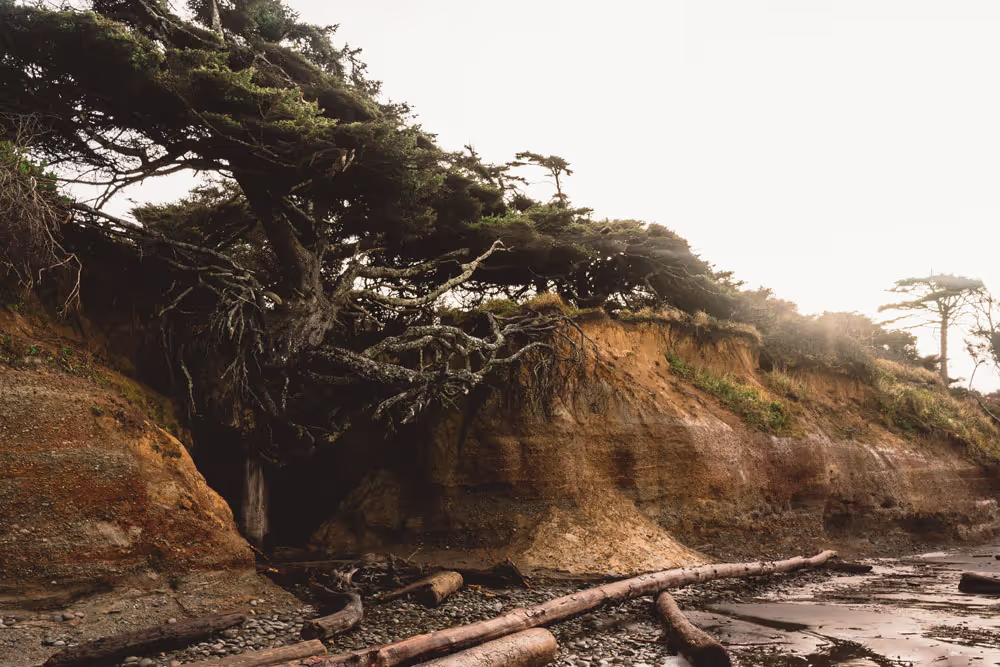
Perched precariously overlooking the Pacific Ocean, the Tree of Life is one of the most famous trees around, and as I learned, there are a lot of reasons for its appeal. Over time, erosion created a cave below the Tree, known as the Tree Root Cave. Now, the Tree’s roots appear to barely cling to either side of the entrance to the cave, as a stream flows through the cave and into the ocean, taking soil with it. Tourists, Instagrammers, and locals visit the Tree each year and wonder at its ability to grow and maintain such green leaves without nutrient-rich soil below it.
The Tree of Life is a Sitka Spruce, and its signature characteristics also help fuel the flurry of “how does it do that?!” musings among its admirers. Running along the west coast, Sitka Spruce are the largest type of Spruce and are known for their “towering height and wide trunk.” With just the cave and stream below its roots, one can’t help but wonder how the sheer size and weight of the Tree don’t cause the cave to collapse.
With its visible roots clinging to the cave’s walls and no soil below it, the Tree of Life appears to be “immortal.” However, those of us who have seen the effects of coastal erosion first hand know this is not the case; the Tree of Life won’t live forever (anyone remember when there was still a beach at Washaway Beach?). We know it’s only a matter of time before erosion takes its course, and the Tree “collapses into a heap, leaving only a million Instagram memories.”
The Tree of Life’s inevitable demise, I think, is one of the biggest reasons to see it now. As one of the many travel bloggers who have visited explained, “It is already a visual marvel, and every year it stays standing makes it even more so.”
References:
Ludwig, Samantha. “The Story Behind the Kalaloch Tree of Life.” The Culture Trip, 2 May 2018. https://theculturetrip.com/north-america/usa/washington/articles/the-story-behind-the-kalaloch-tree-of-life/.
Robertson, Greg. “Washington State’s Tree of Life has been Defying Logic for Years.” Travel Awaits, 11 April 2021. https://www.travelawaits.com/2563221/kalaloch-tree-of-life-washington/.
“Tree of Life/Tree Root Cave.” Kalaloch Lodge. https://www.thekalalochlodge.com/explore/olympic-national-park/tree-of-life.
“The Magical Tree of Life.” Unusual Places. https://unusualplaces.org/the-magical-tree-of-life-in-kalaloch-beach-washington/.
Williams, Allison. “Washington State’s Best Beaches in Winter.” Seattle Met, 2 February 2021. https://www.seattlemet.com/travel-and-outdoors/washington-state-best-beaches-in-winter.
Wiseman, Theodore. Photo of the Tree of Life. 4 January 2019. https://www.instagram.com/p/BsOdMDgAJQq/
© Holly Duffy, July 2021
Touch whale bones, examine shipwreck artifacts and connect with the coast's living history.

Support our mission, get involved in educational programs, or contribute through donations and volunteering.