Birds
What Do Birds Do During Storms?
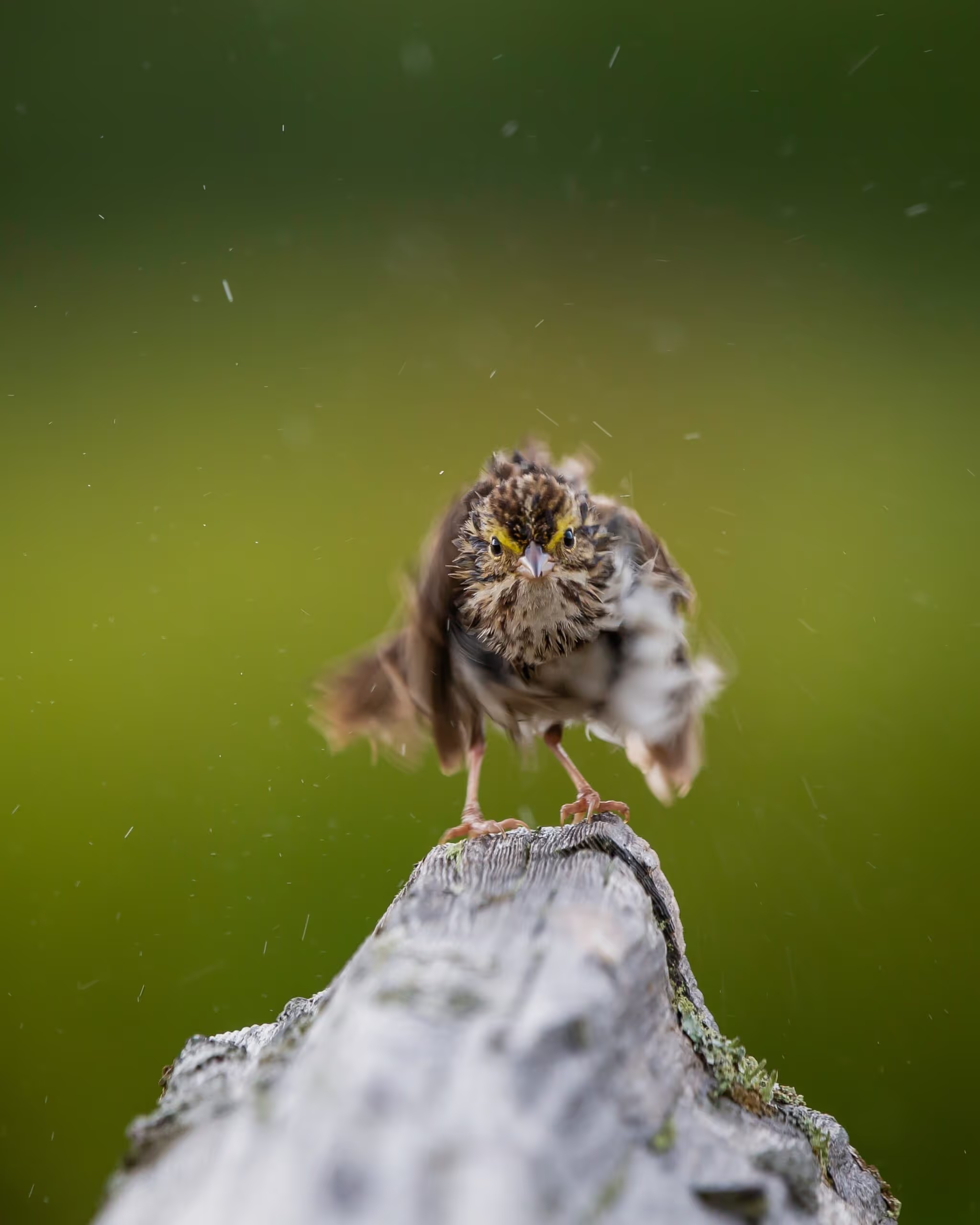
This weekend, as we prepared to set our clocks back, Western Washington experienced the first storm of the season. As I watched the wind whip through the trees outside my window during Saturday’s downpour, I couldn’t help but think about my winged friends and wonder how the crows and jays that normally inhabit those trees were surviving the storm.
Trees and shrubs can make a big difference during wind and torrential rain storms. Jays, sparrows, crows, and other birds that usually roost on branches will wait out a storm on thick, sturdy branches near the trunk and facing away from the wind and rain. These “perching birds” automatically grab branches as they sleep, which allows them to stay attached to a branch while retaining heat and energy until the storm passes.
Backyard bird watchers might notice birds “doing their bird thing,” appearing to be unbothered by light to heavy rain. This is normal activity–generally speaking, birds are active and need to eat often. When necessary, songbirds will venture out of their shelters to eat in the rain. Some, like robins and thrushes, are especially bold in the rain, capitalizing on the opportunity to catch worms. Birds spend much of their days caring for their feathers, or preening, which creates a waterproofing effect that allows their bodies to stay dry in the rain.
Ducks, herons, and other birds that spend most of their time on or near water are in their element–even thriving–during heavy rains. Ducks and waders like herons will leave their usual spots in deeper water to explore newly flooded areas and the opportunities (and food) that may await.
Seabirds like albatrosses and gulls are strong fliers and can soar in heavy winds. During multiple days of heavy wind, though, seabirds have nowhere to rest and some will return to shore. Others will make it to the edge of the storm and ride it out where the conditions aren’t as rough.
Cavity dwelling birds, like chickadees, owls, and woodpeckers, will shelter from storms inside of cavities. Owls in particular struggle to fly in the rain. Owl wings were built for silent flight, but are not waterproof and become waterlogged quickly.
Large raptors like hawks “seem as unhappy as cats in the rain.” Similar to owl feathers, hawk feathers become waterlogged quickly and can take a whole day to dry out. If you have seen a totem pole with a hawk standing tall at the top with its wings outstretched, this is what it may look like when a wet hawk dries itself after a heavy rain.
Birds are sensitive to changes in barometric pressure, and studies have shown that birds can hear infrared sounds, so it makes sense to think they may be able to hear large storms coming. Birds that find themselves in the path of a major storm may adjust their path. For example, large weather events like hurricanes have altered the migration seasons of migratory birds.
Sources
Clark Josiah. “Where do birds go when it rains?” Bay Nature, 11 December 2014. https://baynature.org/2014/12/11/ask-naturalist-birds-rains/ Accessed 6 November 2022.
Gillson, Greg. “Where do birds go when it rains and storms?” What Birds are in my Backyard, December, 2019. https://www.whatbirdsareinmybackyard.com/2019/12/where-do-birds-go-during-bad-weather.html Accessed 6 November 2022.
Grrlscientist, “Where do birds go in a hurricane?” Forbes, 8 September 2017. https://www.forbes.com/sites/grrlscientist/2017/09/08/where-do-birds-go-in-a-hurricane/?sh=793f5f72254a Accessed 6 November 2022.
“What do small birds do during a storm?” Cornell Lab of Ornithology, 1 April 2009: https://www.allaboutbirds.org/news/what-do-small-birds-do-in-a-storm/ Accessed 6 November 2022
Photo by Pete Nuij on Unsplash
© Holly Duffy, November 2022
Touch whale bones, examine shipwreck artifacts and connect with the coast's living history.

Support our mission, get involved in educational programs, or contribute through donations and volunteering.