Birds
Western Snowy Plovers and Washington State’s Protection Efforts
September has nearly come to an end. This means the nesting season is over and many dune areas around the county have opened back up to public use. About this time last year we talked about streaked horned larks, one of the vulnerable bird species who nest in our area. So it seems like a good time to address another: the western snowy plover.
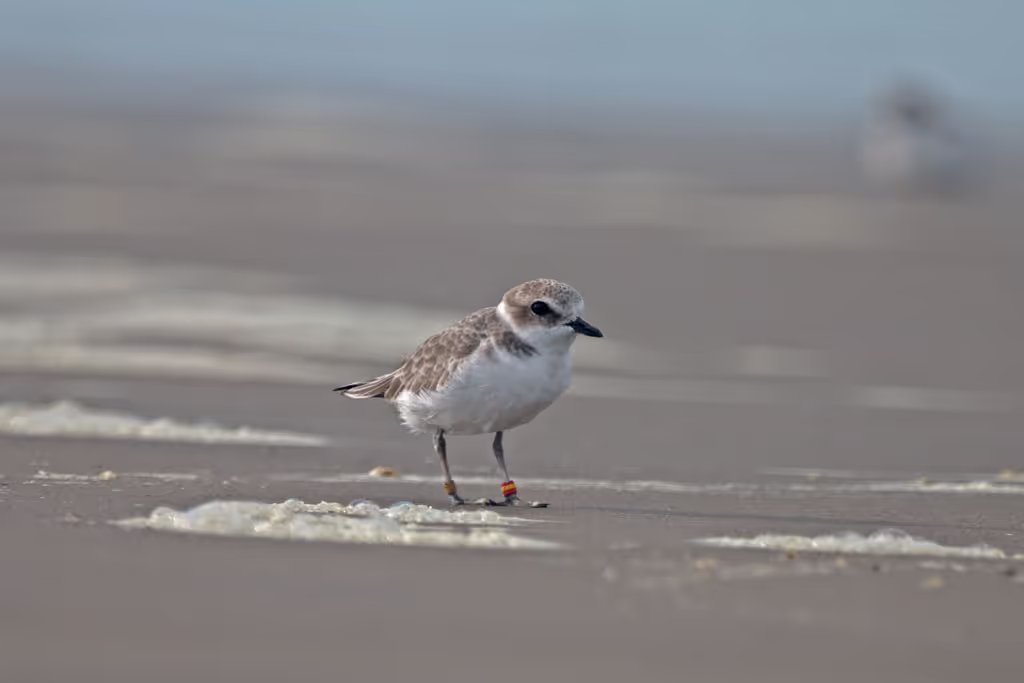
The western snowy plover (Charadrius nivosus nivosus, formerly Charadrius alexandrinus nivosus) is a shorebird about six inches in length with thin, dark colored bills and legs. Their plumage is colored to match their environment with sandy-colored dorsal feathers and white chests and bellies. They also have dark patches on their heads and shoulders. During the breeding season these patches are darker in males than in females while juveniles lack them entirely.
On the Pacific Coast, western snowy plovers can be found from Washington State to Baja California. In Washington, they can only be found on beaches, spits, mudflats, and other sparsely vegetated areas in Grays Harbor and Pacific Counties. They may be found in these areas year round, with Copalis Spit being the northernmost location they may be found in regularly. Federally they are considered a threatened species while in Washington State they are an endangered species with less than 100 adult birds present any given year.
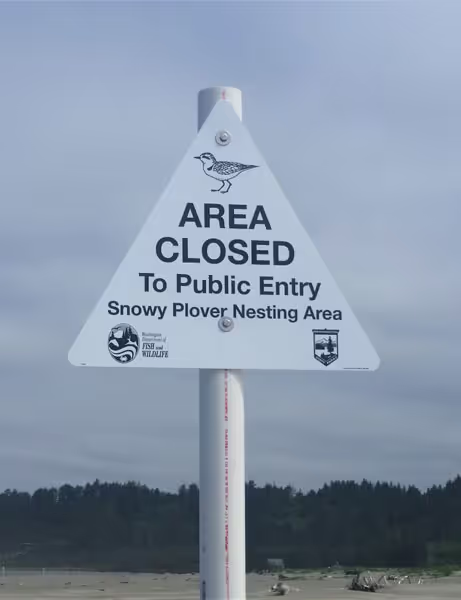
When the state first declared western snowy plovers endangered in 1995, Damon Point and the Oyhut Wildlife Recreation Area were active nesting sites. However, according to the site reports conducted by both Washington and U.S., Fish and Wildlife from more recent years, snowy plovers more typically breed in Pacific County sites, including Midway Beach and Leadbetter Point.
The breeding season extends from March to September. Nests are very well camouflaged and can be very difficult to spot, even for experienced birders. Typically consisting of a scrape or depression in a sandy, open area. The nests themselves are sparsely vegetated, though the area around the nests can have driftwood, vegetation, or other natural camouflage. Nests. If a predator gets too close to the nest, one of the adults will pretend to be injured, drawing the predator’s attention towards them.
Clutch size is about three eggs. The eggs are sandy colored with dark speckles, making it easy for the eggs to blend into their environment. Though males and females share incubation duties, the female will leave soon after hatching to start another nest with a new mate if there is enough time left in the season. If the clutch failed, the pair will often stay together, but move to a different nesting place before trying again.
Plover chicks hatch about a month after laying and leave the nest within hours of hatching. With the parents’ guidance, they forage for food on their own, though they require regular brooding. They fledge about a month after hatching.
Western snowy plovers feed on both marine and terrestrial invertebrates, such as sand crabs, flies, and beetles. They are primarily visual foragers. When foraging on flies, they will run through a group with their mouths open and catch flies out of the air.
Corvids, raptors, gulls, skunks, and canines are known predators to western snowy plovers. However, the largest threats to the species are human disturbance and habitat loss. The breeding season coincides with the greatest amount of human activity on coastal beaches. Vehicle use, the presence of dogs and horses, and human entering the nesting habitat all have a negative effect on nest success. In addition, litter left on beaches attract predators to the nesting area.
Habitat loss is both due to urban development and invasive species. Development can alter both the habitat itself and increase the amount of human use in the area, both of which can result in nesting site disturbance. Invasive species, such as European beach grass (Ammophilia arenaria), alter the habitat by changing the structure of the dune, reducing the diversity of prey species, and crowding out native plants in areas they are established.
The best thing you can do to help protect the western snowy plover is just be a respectful beachgoer. Pay attention to any signs on the beach, pack out any trash you produce, don’t take large amounts of sand or driftwood off the beach, and keep dogs leashed unless in a designated off-leash area.
References
Bruscas, A. (2014, June 16). DNR explains Damon Point signs, protection efforts. North Coast News. Retrieved September 22, 2021, from https://web.archive.org/web/20140820201830/http://northcoastnews.com/news/dnr-explains-damon-point-signs-protection-efforts.html.
National Parks Service. (2016, June 25). Western snowy plover. National Parks Service. Retrieved September 24, 2021, from https://www.nps.gov/chis/learn/nature/snowy-plover.htm.
U.S. Fish & Wildlife Service. (n.d.). Western Snowy Plover (Coastal). U.S. Fish & Wildlife Service. Retrieved September 24, 2021, from https://www.fws.gov/wafwo/articles.cfm?id=149489648.
U.S. Fish and Wildlife Service. (n.d.). Western snowy plover species profile. U.S. Fish and Wildlife Service. Retrieved September 23, 2021, from https://ecos.fws.gov/ecp/species/8035.
Washington Department of Fish and Wildlife. (n.d.). Western Snowy Plover. Washington Department of Fish & Wildlife. Retrieved September 23, 2021, from https://wdfw.wa.gov/species-habitats/species/charadrius-nivosus.
Washington Department of Fish and Wildlife. 1995. Washington state recovery plan for the snowy plover. Olympia, Wash. 87pp. Retrieved September 21, 2021, from https://wdfw.wa.gov/sites/default/files/publications/01518/wdfw01518.pdf
Image 1 copyright Peter Pearsall/USFWS
© Laura Caldwell, September 2021
Touch whale bones, examine shipwreck artifacts and connect with the coast's living history.

Support our mission, get involved in educational programs, or contribute through donations and volunteering.