Plants
The Indian Plum: A Native Plant with Many Names

The Indian Plum (Oemleria cerasiformis) is known by many different names.
Indian Plum is used by a number of sources, including Washington State University (3), CalScape (4), and the United States Department of Agriculture (USDA) (5). "Osmaronia" and "Oemleria" are also common names for this species (2). Several sources mostly use "Oemleria" (3, 4, 5, 6, 7) and both Portland Nursery and Native Plants PNW use "Osmaronia" (1, 2). Additionally, Oregon State University (6) and the Washington Native Plant Society (7) both have “Oso Berry” listed as a common name. However, in preparing this post, we were only able to find one source calling this species "Oregon Plum", "Squaw Plum", "Indian Peach", "Bird Cherry", and "Skunkbush" (1).
The Indian Plum is one of the first signs of spring in the forest west of the Cascade Mountains. Its natural range extends from the areas around Vancouver and Victoria, British Columbia down to Santa Barbara County, California. It can also be found in the Sierra Nevada range. The Indian Plum can be maintained as either a small tree or a multi-stemmed shrub, making it an option for an array of different openings that you might have in your garden.
The Indian Plum is a dioecious plant. This means that you will need to have a female plant and at least one male plant located somewhere else in your garden in order for it to produce fruit. In the wild, there are usually more males than females because females have a higher rate of mortality. Indian Plums can grow anywhere from 4.5 to 20 feet (1.5 to 7 meters) tall, so we advise against planting them too close to any structures. Females grow at a slower rate than males.
The Indian Plum produces small, five-lobed white flowers with green calyxes that bloom between February and April, which add a splash of color to forests that would otherwise be largely green, as well as to home gardens that might not have anything else blooming at that time. Males tend to produce flowers at an earlier age than females.
There is some debate as to what the flowers that Indian Plums produce smell like. They've been described as smelling like "something between watermelon rind and cat urine" (1), which would be quite odoriferous. Some have compared the fragrance to almonds (1), which would be far more pleasant. It has even been suggested that female flowers smell better than male flowers (1). Unfortunately, we were unable to smell the flowers for ourselves while preparing this post as the flowers were just out of season.
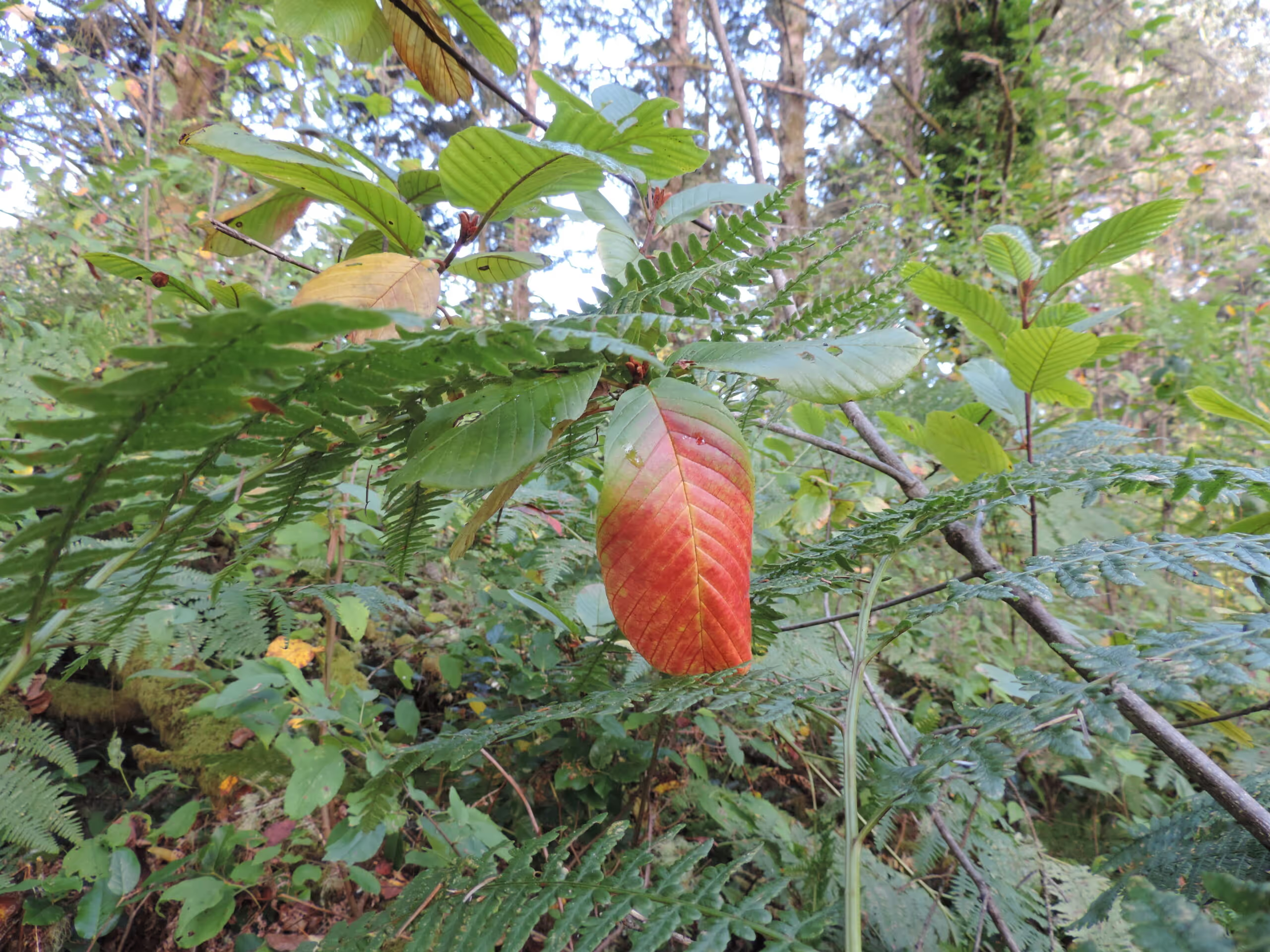
The Indian Plum has beautiful "bright green" (1) leaves during the spring months. In the summer, the leaves become a darker shade of green. They are shaped like a lance, and produce a cucumber-like smell when crushed. The fruit are similar in size and texture to small plums. Immature fruit is colored in a shade of peach, while mature fruit takes on a dark purple appearance. The typical fruit ripening season is from May to July, so the next Indian Plum you see may currently have ripened fruit on it. The fruit is safe for most people to eat in small quantities. However, in large quantities, it may be problematic because it is believed to contain small amounts of Hydrogen Cyanide, which the Centers For Disease Control and Prevention (CDC) describes as "a colorless or pale-blue liquid or gas with a bitter, almond-like odor "that" interferes with the body’s use of oxygen and may cause harm to the brain, heart, blood vessels, and lungs" (8).
In the wild, the Indian Plum is a common understory plant in open forests and along the banks of streams. It is a member of the Rose Family and the sole member of the Oemleria Genus. Native Americans used the Indian Plum as food (in small quantities). The bark and twigs from the plant were for assorted medical purposes.
References
© Ian D. Caldwell, June 2022
Touch whale bones, examine shipwreck artifacts and connect with the coast's living history.

Support our mission, get involved in educational programs, or contribute through donations and volunteering.