Birds
The Belted Kingfisher
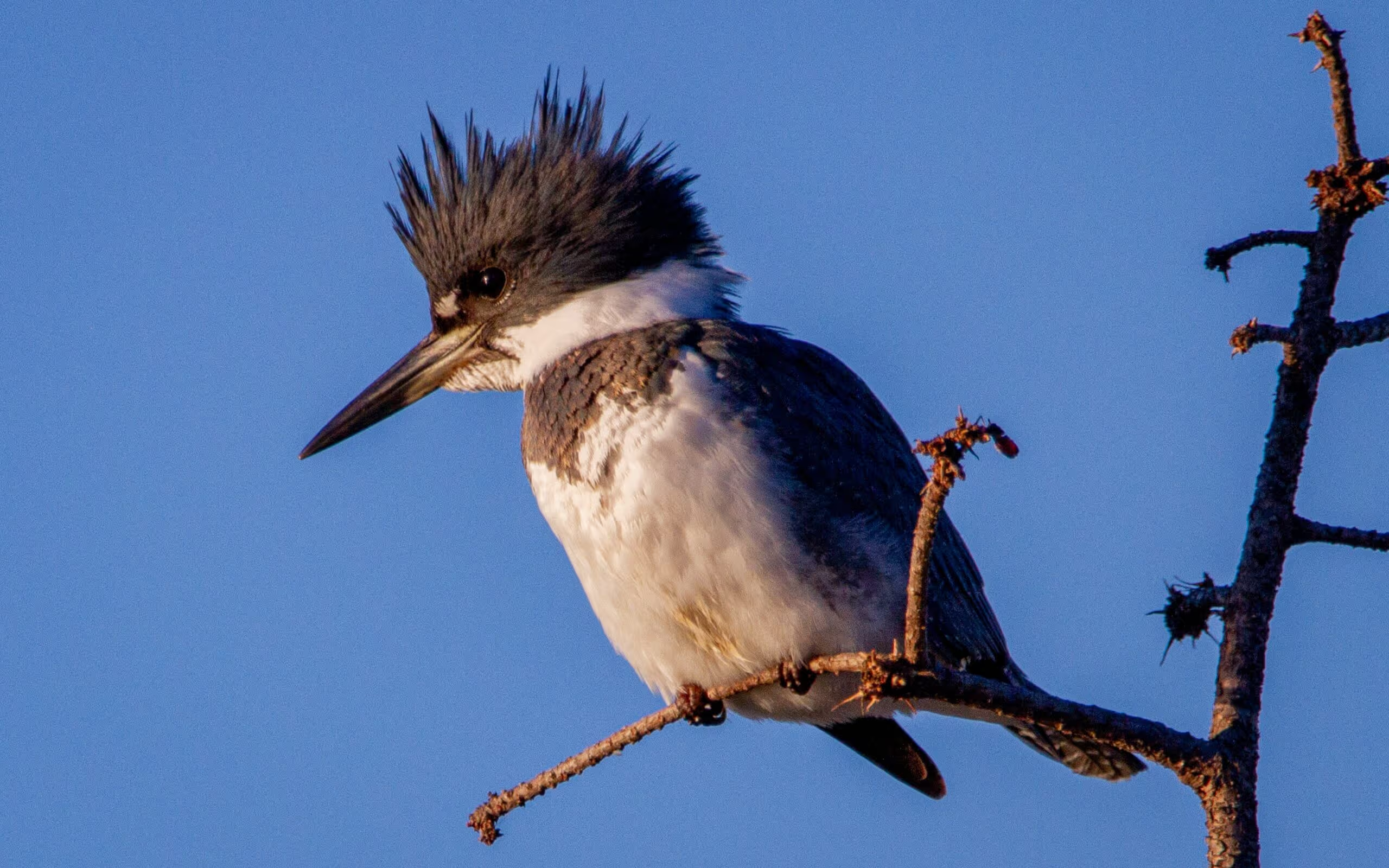
Belted Kingfishers have been on Earth for a long, long time. Fossils of Belted Kingfishers that could be up to 600,000 years old have been found in Florida, Virginia, Tennessee, and Texas. Today, the Belted Kingfisher (Megaceryle alcyon) is considered fairly common year-round on the Washington coast. After doing a little bit of research for this blog post, it is no surprise to me that this bird is considered a king.
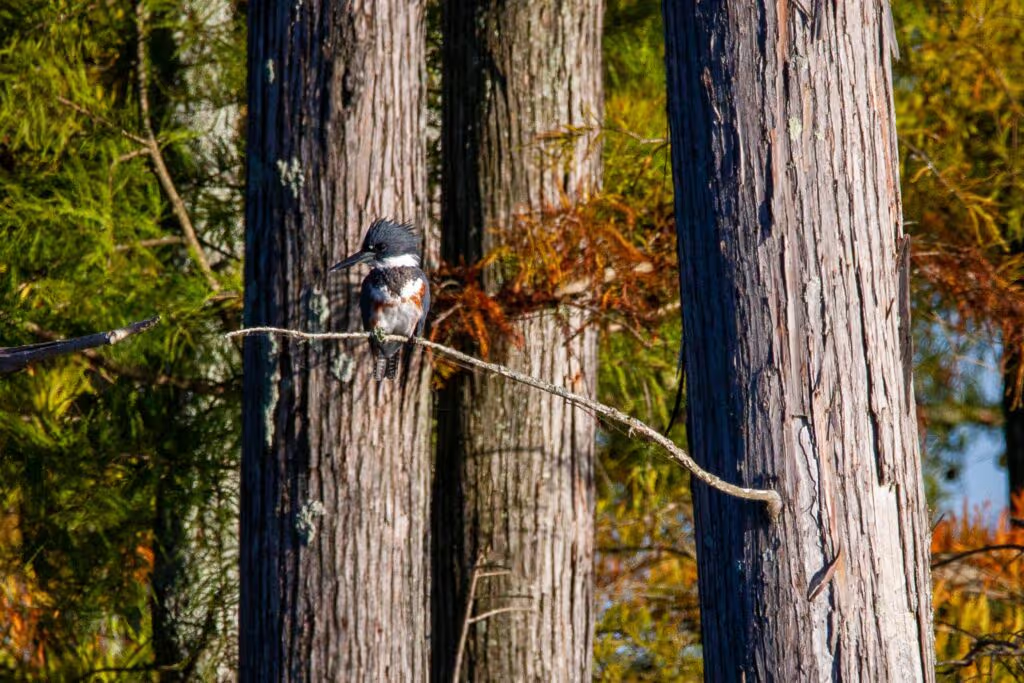
The Belted Kingfisher is a stocky bird, ranging between 11 and 14 inches in length and with a wingspan up to 23 inches. With gray-blue feathers on their wings and bright white feathers over their collars and bellies, the Belted Kingfisher is one of the few species of bird where the female is more colorful than the male. Young Belted Kingfishers have dark orange bands around their bellies. As they age, this color fades completely on the males and is replaced with stark white feathers. The females keep their rust colored “belts” throughout adulthood.
As its name would suggest, the Belted Kingfisher is an adept fisher. It has an “acrobatic hunting technique,” hovering above the water and waiting for the right time to plunge head first onto its prey, which is often a fish, frog, or crawdad. Belted Kingfishers can dive into the water to catch their prey. They will also use this technique to avoid becoming prey, diving below the surface to avoid predators like hawks.
The Belted Kingfisher is considered to be a solitary, independent bird. It is described as being cocky, raucous–even having an “air of self-importance,” and being like a “Blue Jay on steroids.”
The Belted Kingfisher has a large head and powerful bill. It has a beak like pincers that it uses to grab its prey and then beat it against its perch. Once the Belted Kingfisher has killed or stunned its prey, it will maneuver it with its beak until it slides down its throat headfirst. (Watch a Belted Kingfisher in action here.)

Belted Kingfishers have acidic stomachs as nestlings, which help them digest bones, fish scales, and shells. By the time they leave the nest, their stomach chemistry will have changed, and they will regurgitate pellets around their fishing and roosting perches that consist of fish scales, bones, and other indigestible bits.
There have been reports of Belted Kingfishers in Iceland, the Galapagos Islands, Greenland, Hawaii, and the Netherlands–just to name a few places. During winter and migration season, they can be found near almost any smooth-surfaced waterways including streams, lakes, bays, coasts. They spend their winters in areas where water doesn’t freeze. (You can see the Belted Kingfisher’s distribution map within Washington State by clicking here.)
During the breeding season, Belted Kingfishers’ habitats are slightly more limited, as they stick to areas with “suitable dirt banks for nesting,” which tend to be areas without many trees. This is because they build nests by tunneling into banks, instead of building nests in trees like many other birds. The best areas for tunneling tend to be the banks along waterways, where large roots won’t get in the way.
The Belted Kingfisher appears to have been built for this type of tunneling. It has a “syndactyl foot,” meaning that two of its toes are fused together. With short, stocky legs and two webbed toes, Belted Kingfishers are efficient tunnelers, digging and slashing their nests deep into muddy and sandy banks. The average tunnels range between three and six feet deep, but Belted Kingfishers have been known to dig nesting holes as deep as 15 feet!
Belted Kingfishers work in pairs to construct their nests. Outside of breeding and nesting season, though, Belted Kingfishers spend their time alone. After the mating season is over, the pairs break up and each bird will find a territory of its own that it will defend. Belted Kingfishers can be very territorial and will chase intruders out of their space with a loud, rattling call.
Sources
“Belted Kingfisher.” All About Birds, https://www.allaboutbirds.org/guide/Belted_Kingfisher/overview. Accessed 1 January 2023.
“Belted Kingfisher. Bird Web, https://www.birdweb.org/birdweb/bird/belted_kingfisher. Accessed 1 January 2023.
“Belted Kingfisher Nest Burrows up to 15 Feet Long.” Bird Note, Audubon, https://www.audubon.org/news/belted-kingfishers-nest-burrows-15-feet-long. Accessed 1 January 2023.
Benbow, Mike. “Tulalip Bay’s Belted Kingfishers are Kings of the Waterfront.” Everett Herald, Accessed 1 January 2023.
Hewitt, Renee. “Noisy Guardians of the Water Ways.” Into Birds, https://intobirds.com/belted-kingfisher-is-the-noisy-guardian-of-the-water-ways/. Accessed 1 January 2023.
“Meet the Belted Kingfisher.” Sacramento Audubon Society, https://www.sacramentoaudubon.org/kids-corner/6hsziifjrjcokh3qbej8ta5ialocm2.
Photo 1 & 2 by Joshua J. Cotten on Unsplash[view photo 1 & 2 in Unsplash].
Photo 3 by Tyler Jamieson Moulton on Unsplash[view photo 3 on Unsplash]
© Holly Duffy, January 2023
Touch whale bones, examine shipwreck artifacts and connect with the coast's living history.

Support our mission, get involved in educational programs, or contribute through donations and volunteering.