Birds
Takeoffs and Landings
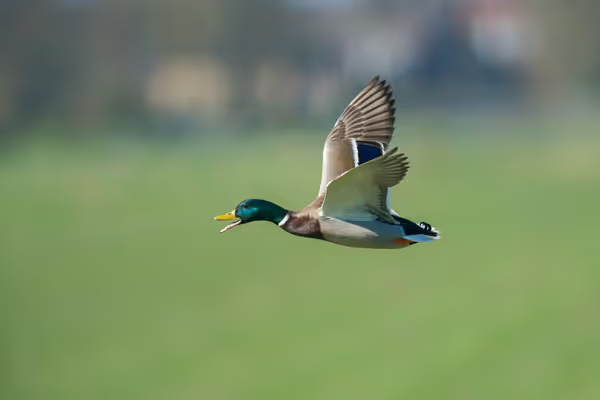
Photo by Vincent van Zalinge on Unsplash[photo from Vincent van Zaling]
Washington State is situated along the migratory bird pathway known as the Pacific Flyway. Among the 12 states in the Flyway, we typically see the second most waterfowl during the migration season. Although not a rare sighting by any means, waterfowl can still be fascinating to observe.
The feathers on waterfowl wings help create the “essential elements of flight,” lift and thrust. “Lift” refers to the force that pushes the bird higher into the air, while “thrust” is the force that propels the bird forward through the air. Feathers also contribute to waterfowl’s ability to regulate body heat, dive underwater, and emote.
Primary feathers on the bird’s outer wings propel it forward, while secondary inner feathers launch it higher into the air. Primary flight feathers are asymmetrical and overlap, giving the wing a curved, tapered shape. These feathers provide thrust and are essential to flight. In fact, it has been a practice in domesticating birds to prevent flight by cutting off primary feathers.
Secondary flight feathers provide the lift that launches the bird higher into the air. A small group of feathers near the body creates a “winglet” that helps to slow flight during landing. Tail feathers act as a rudder and help provide stabilization and control during flight. Its powerful muscles, narrow body, and hollow yet sturdy bones also contribute to the bird’s ability to cruise through the air with apparent ease.
Pictured: Mallard ducks in flight. Primary feathers on the birds’ outer wings propel the bird forward, while secondary inner feathers push the bird higher into the air.
Photo by Joshua J. Cotten on Unsplash[photo from Joshua J. Cotten]
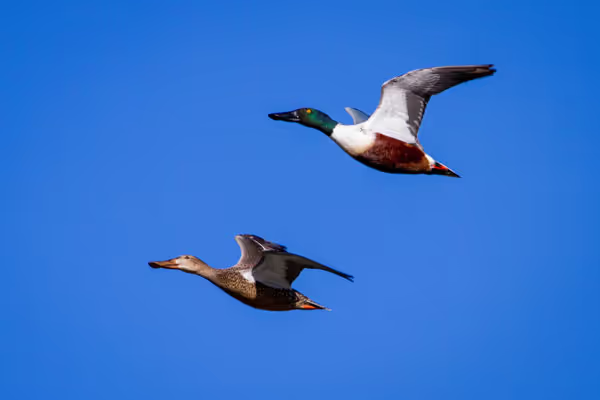
Variations in wing shape and size allow waterfowl to thrive in their respective habitats. Geese and “dabbling ducks,” like Mallards, inhabit shallow wetlands that are easily traversed by predators. Long and broad wings are key for quick takeoffs and maneuvering around obstacles like trees and cattails.
Shorter, narrower wings help Surf Scoters and other divers reach great depths while feeding in the deeper waters that they frequent. Diving waterfowl squeeze their wings tightly against their body while diving and are able to reach great depths.
With their short and less-powerful wings, divers need to run across the water in order to build up enough power for takeoff. On the other hand, waterfowl with broad wings are able generate enough power that they do not need to paddle as hard during takeoff.
Webbed feet help both dabblers and divers swim and dive more efficiently in their aquatic environments. As the bird pushes its webbed feet back and down in a powerful downstroke, the webbing between its toes stretches, creating more surface area and generating a stronger push. On the forward stroke, the toes turn inward or clench together to minimize water resistance. When underwater, divers paddle their feet constantly to keep from floating to the surface. Dabblers paddle to remain partially submerged while feeding in shallow water.

Pictured: Dabbling duck paddling on the surface. The webbing between the duck’s toes stretches on the downstroke, creating more surface area and generating a stronger push. On the forward stroke, the toes turn inward or clench together to minimize water resistance.
Photo by Elena G on Unsplash[photo from Elena G]
The legs and webbed feet of waterfowl are essential for paddling. The placement of its legs near the back of its body and its large webbed feet give the bird its characteristic waddle when walking on land. Dabblers tend to nest on land, so their legs are usually not positioned as far back as those of diving ducks.
Waterfowl use everything from their feathers to their toes to thrive in very diverse habitats. If you would like to learn more about these fascinating birds, check out more articles right here on our blog!
Sources
“Let’s Go Waterfowl Hunting,” Washington Department of Fish and Wildlife, https://wdfw.wa.gov/hunting/requirements/waterfowl. Accessed 29 October 2021.
James, Dale J., PHD. “Understanding Waterfowl: Ducks in Motion.” Ducks Unlimited, https://www.ducks.org/conservation/waterfowl-research-science/understanding-waterfowl-ducks-in-motion. Accessed 31 October 2021.
Rae, Lauren. “How Duck Flight Works,” Ducks Unlimited Canada, https://www.ducks.ca/stories/conservator/how-duck-flight-works/. Accessed 31 October 2021.
Photos
© Holly Duffy, November 2021
Touch whale bones, examine shipwreck artifacts and connect with the coast's living history.

Support our mission, get involved in educational programs, or contribute through donations and volunteering.