Nature
Scotch Broom
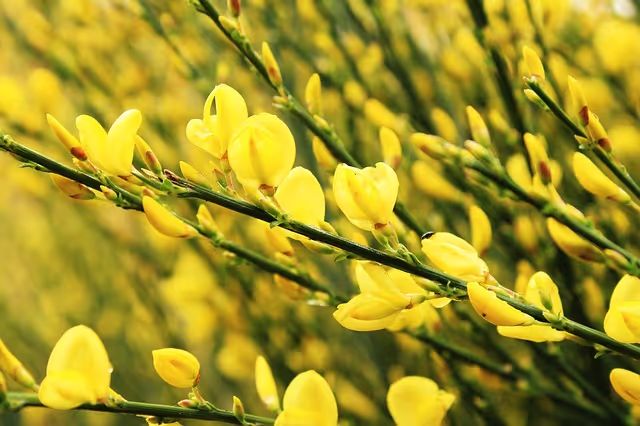
If you’ve been around Ocean Shores recently, you might have seen these yellow blooms starting to pop up. They are a familiar sight here in Western Washington, commonly found along roads, open fields, and even the dunes.
Scotch broom, or Scot’s broom, (Cytisus scoparius) is a member of the Fabaceae (legume) family native to Northern Africa and Europe. It was brought to the United States as an ornamental plant in the 1800s and was used in gardens as well as to prevent erosion. Currently, it grows throughout the east and west coasts of North America, inland to Idaho, Montana, and Utah, and occurs in Hawaii. In Washington, it is more prevalent west of the Cascades, as this distribution map from the Washington Department of Agriculture shows.
Scotch broom is a perennial shrub that reaches 3-12 feet in height. It can grow under a wide variety of conditions, but prefers well draining soil and full sun. It is commonly found in open or disturbed areas, including roadsides, harvested forests, grasslands, and pastures. Plants typically live to about 17 years of age.
Stems are erect and numerous. Young stems are green with hairs and five prominent ridges. As the stems age, they lose the hairs and the ridges and turn yellowish-brown. Leaves are small and oval-shaped. The plant is deciduous and may not have leaves for the majority of the year.
The plant blooms from April to July. Flowers are similar to others in the Fabaceae family and have five petals. They are yellow in color, but may have orange coloration near the center. They are ½ to 1 inch long.

Once plants are about 3 years of age, they begin to produce seeds. Seeds are produced in blackish-brown hairy seed pods in the late summer and each pod contains 3-12 seeds. A single plant can produce over 10,000 seeds per year and the seeds can remain viable from 5 to 60 years. There are numerous ways for seeds to spread, from being ejected from pods to natural forces such as erosion and water flow to human disturbance.
There are many human uses for Scotch broom. In addition to its decorative uses, the branches can be used to make brooms, as well as in weaving, thatching, and rope making. Paper can be made from the bark. Yellow, green, and brown dye can be made from the plant.
The plant is edible to humans and the buds can be used as a caper substitute and a coffee alternative. In beer, it is used to add bitterness and increase intoxicating effects. Ingesting large amounts can cause abdominal pain, nausea, and vomiting.
Medicinally, Scotch broom contains the alkaloid sparteine and has traditionally been used as a cathartic and diuretic. Because it can cause the walls of the uterus to contract, it has also been used as a labor inducer and to prevent blood loss after childbirth. However, sparteine is not FDA approved for antiarrhythmic purposes. Limited clinical studies have been conducted on Scotch broom’s medicinal qualities and its efficacy is generally not supported.

In Washington, Scotch broom is a Class B Noxious Weed, a non-native species whose distribution is limited to portions of the state. It is also on the state’s Prohibited Plant List (also known as the quarantine list), meaning it is illegal to transport, buy, sell, offer for sale, or distribute plants or plant parts in the state. This includes seeds or any seed mixes that contain Scotch broom seeds. It received this status because it spreads rapidly and displaces native plants and grasslands, which can result in habitat loss for plant, animal, and insect species. It can also undermine sustainable forestry efforts by preventing new trees from establishing themselves in harvested forests. Finally, the seeds are toxic to livestock and horses, making plants a potential danger should they appear in pastures.
In areas with small infestations, plants can be dug out by hand. Try to remove as much of the root as possible so the plant does not grow back. Once the plants are removed, mulch or re-vegetate the area with non-invasive plants to provide competition for any seeds or plant parts that remain or may come to settle in the area. Due to the nature of Scotch broom’s seeds and its penchant for thriving in disturbed areas, sites where control measures have been undertaken will need to be monitored for several years.
References
Drugs.com (2020). Broom. Retrieved May 02, 2021, from https://www.drugs.com/npp/broom.html
King County Noxious Weed Control Program (2008). King County Best Management Practices - Scotch Broom (Rep.). Retrieved May 2, 2021, from https://your.kingcounty.gov/dnrp/library/water-and-land/weeds/BMPs/Scotch-Broom-Control.pdf
Washington State Noxious Weed Control Board (2014). Written Findings of the Washington State Noxious Weed Control Board - Cytisus scorparius (Rep.). Retrieved May 2, 2021, from https://www.nwcb.wa.gov/images/weeds/Cytisus-scoparius-WF.pdf
Washington State Noxious Weed Control Board (n.d.). Scotch Broom. Retrieved May 02, 2021, from https://www.nwcb.wa.gov/weeds/scotch-broom
Zouhar, K. (2005). Cytisus Scoparius, C. striatus. Retrieved May 02, 2021, from https://www.fs.usda.gov/database/feis/plants/shrub/cytspp/all.html
© Laura Caldwell, May 2021
Touch whale bones, examine shipwreck artifacts and connect with the coast's living history.

Support our mission, get involved in educational programs, or contribute through donations and volunteering.