Wildlife
Please Don’t Touch the Seal Pups
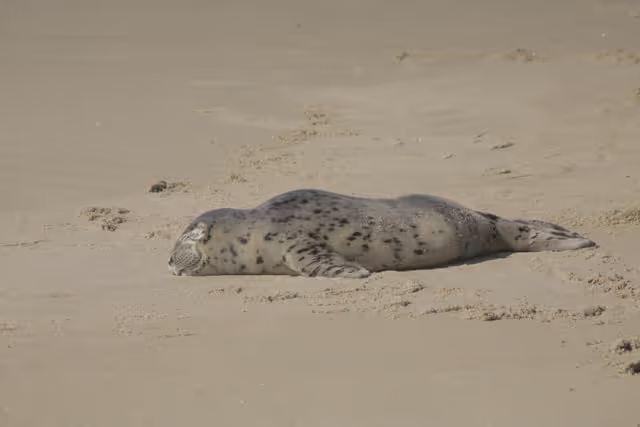
Spring has sprung, my hay fever is back, and it’s time for an annual PSA: Please don’t touch the seal pups.
Harbor seals (phoca vitulina) are “true seals,” characterized by their short fins and small holes on either side of their head instead of ear flaps. They have short snouts and fur that varies in color and pattern, ranging from light tan, silver, or blue-gray with dark spots or light rings. The lifespan of harbor seals in the wild can range up to 30 years. Adults can weigh up to 285 pounds and reach 6 feet in length.
“Pupping” occurs progressively later from Washington to Alaska and progressively earlier from Washington to Mexico. In Grays Harbor, we typically see harbor seal pups between the middle of April to July. Harbor seal pups can swim immediately after birth and can dive for up to two minutes when they are just two to three days old.
Within three to four weeks of birth, pups are weaned from their mothers as they hunt and feed. By the end of their first month of life, harbor seal pups will “haul out” on journeys of their own of over 100 miles.
Harbor seals prefer familiar areas, so mothers rarely travel far from their pups. Lone pups rest on shorelines, regulate their body temperatures, and learn to survive on their own until mothers return to nurse. This is a challenging and vulnerable time for seal pups, and some will not survive. However, seal pups have the best chance at survival when left alone. Mothers will not return to shore if they sense people or pets, and many only return to nurse at night when we are not around.
If you see a seal pup resting on the beach, remain at least 100 yards away. You can help the pup by keeping people and pets at least 100 yards away and minimizing nearby disturbances. Experts recommend observing the seal pup (from at least 100 yards away) for at least 24 hours before determining whether or not it has been stranded.
Human or pet interaction causes mothers to abandon pups and, in most cases, the pups to starve to death. Human or pet interaction can also bring risk of zoonotic disease, or infectious diseases which spread from animals to humans. Illegal feeding of seals can lead to aggression, entanglement, injury, or death. Over time, increased interactions with humans can cause seals to habituate to us, making them more susceptible to harm and less likely to avoid dangers, like boats and propellers.
Harbor seals have fused pelvic bones and are unable to walk on land like their fellow pinnipeds, sea lions. To the untrained eye, a harbor seal’s characteristic caterpillar-like crawl causes it to appear injured. A seal may be in distress if it is unable to return to the water on its own or is in clear need of medical attention.
To report harassment or harm of a marine animal, call the NOAA Fisheries Enforcement Hotline at 1-800-853-1964. Report entangled seals to the Entanglement Reporting Hotline at 1-877-767-9425. To report a dead, injured, or stranded seal, please contact the West Coast Marine Mammal Stranding Network at 1-866-767-6114.
When reporting a marine animal that is in distress or has been stranded, the following information is important to note: species or description of the animal, location and landmarks or specific coordinates, approximate size, condition (alive, dead, wounded, entangled, etc.), evidence of human or pet interactions (ship strike, bite, shooting, etc.), tags if applicable, and your name and contact information.
References:
Jaclynn C. Zier, and Joseph K. Gaydos. “Harbor Seal Species Profile.” SeaDoc Society, UC Davis’ Karen C. Drayer Wildlife Health Center Orcas Island Office. June, 2014. www.eopugetsound.org.
NOAA Fisheries. "Harbor Seal." NOAA. https://www.fisheries.noaa.gov/species/harbor-seal
NOAA Fisheries. “West Coast Marine Mammal Stranding Network.” NOAA. https://www.fisheries.noaa.gov/west-coast/marine-mammal-protection/west-coast-marine-mammal-stranding-network
Seal Sitters. “About Harbor Seals.” Seal Sitters. https://www.sealsitters.org/marine_mammals/harbor_seals.html
Image: https://unsplash.com/photos/Q09kGk-Bx0A, tripleMdesignz. “Seal Lying on Brown Sand.” unspash.com. 10 June 2021.
© Holly Duffy, June 2021
Touch whale bones, examine shipwreck artifacts and connect with the coast's living history.

Support our mission, get involved in educational programs, or contribute through donations and volunteering.