Marine Life
Pacific Mole Crabs
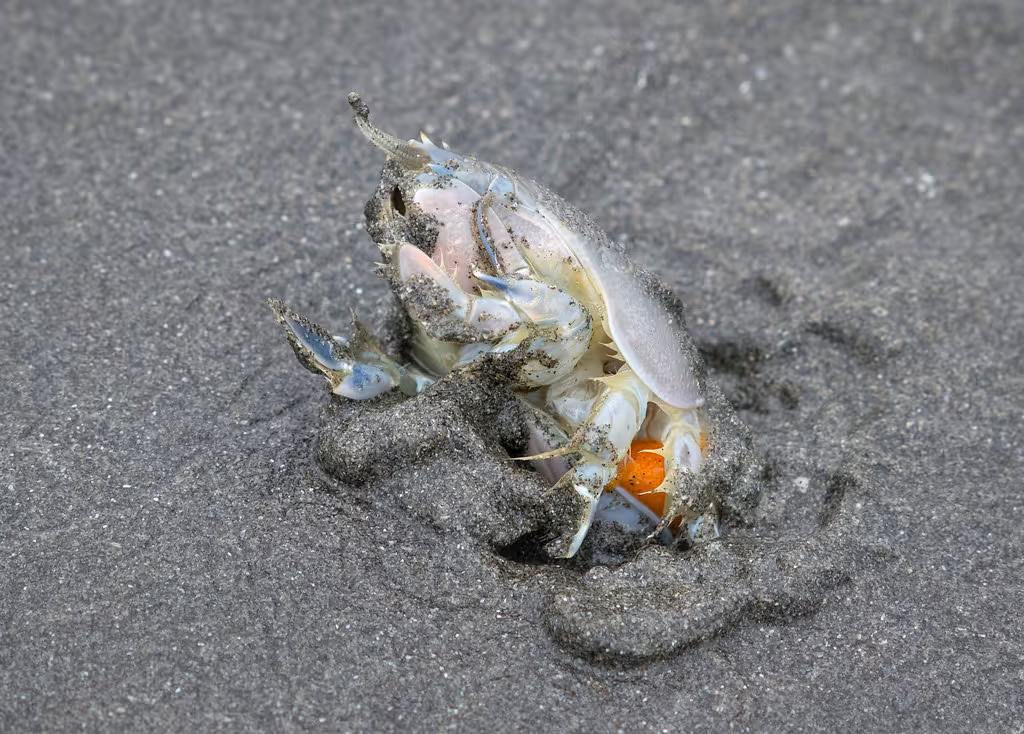
Pacific Mole Crabs are one of only a handful of species that thrive in the swash zone of the wave-swept, sandy beaches along the west coast. The swash zone is where the waves make their way up the beach before retreating back to the ocean. They spend their lives migrating up and down the beach with the tides, so they never stay in the same exact place for too long. The Pacific Mole Crab is also known by two other names: Pacific Sand Crab and Emerita Analoga. It is the only species of the Emerita family that is found locally. However, they aren't the most frequent visitors to the beaches of Ocean Shores. While their complete geographical range extends all the way from Chile and Argentina in the south to Alaska in the North, they are less common north of Oregon. They do make their way to the beaches of Washington from time to time, primarily after warm weather events, such as El Nino years.

The Pacific Mole Crab's body is roughly the same shape as an egg. Their carapaces, which are bony or chitinous cases or shields that cover the back or part of the back of some animals, are 3.5 centimeters long, and have a trio of teeth in front. The carapaces are smooth, with the exception of small, transverse ridges on the anterior portion. The carapace is greenish or gray in color. The underside of the crabs is almost white, and their eggs are orange.
Pacific Mole Crabs also have five pereopods, which are one of four pairs of appendages that they use to help them move. The first four pereopods are flattened, and are used for digging. The fifth pereopod is chelate and slender. It is used for cleaning the gills. They also have an antennal flagellum, which is long and "featherlike". It is used for filter feeding, but is folded beneath the mouth parts when it's not being used. The abdomen, complete with its elongated telson, is generally held in a "reflexed" position underneath the thorax. However, it is extended when the crabs rapidly dig into the sand. The abdominal segments become successively smaller rearward, but the elongated telson is large and takes on the shape of a long spade or arrowhead.
Pacific Mole Crabs are motile filter-feeders, which inhabit the upper surf swash zone on sandy beaches. When a wave makes its way onto the beach, they pop up and ride the wave for a few feet. Then, it quickly burrows into the sand using its abdomen. As the wave retreats back to the ocean, it extends its long, feathery antennae to capture detritus and plankton that were pushed up onto the beach before the wave can pull them back. Within a wave or two, they will pop up again, and ride the wave to a new spot, thereby remaining in the swash zone as the tide rises and falls along the beach. The species primarily inhabits beaches with clean sand that is free of stones and pebbles. It can be found when it pops up in shallow water behind the latest advancing wave. It can also be identified by the V-shaped wake its antennae make as it sifts through the retreating wave for food.
Pacific Mole Crabs are an alternate host to several parasitic worms that primarily take up residence in shorebirds. These worms include the trematode Microphallus nicolli, and the acanthocephalan Profilicollis altmani. The worms live in the crab's hemocoel (body cavity), and are more abundant in larger crabs. Females are particularly susceptible to becoming host to these worms.
References
© Ian D. Caldwell, September 2020
Touch whale bones, examine shipwreck artifacts and connect with the coast's living history.

Support our mission, get involved in educational programs, or contribute through donations and volunteering.