Nature
Pacific Bleeding Heart
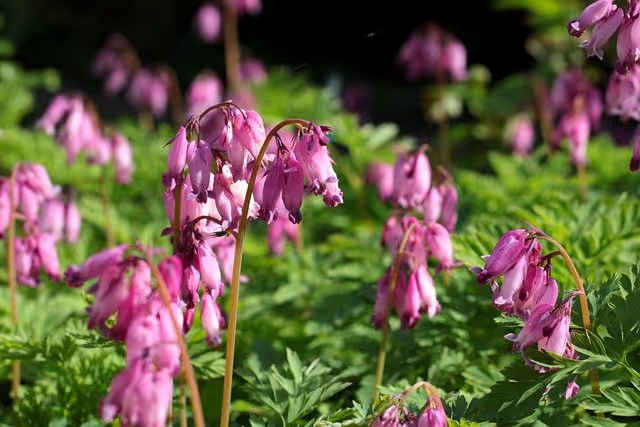
Pacific bleeding heart, also called Western bleeding heart, is a perennial flower native to the West Coast of North America. It’s quite a beauty—and that’s not just my opinion. Its scientific name is Dicentra formosa; the genus name is the Portuguese word for beautiful, which in turn is from the Latin formosus, meaning “beautiful” or “well formed.”
Pacific bleeding heart can be found in moist, shaded environments such as woodlands, forests, and near streams. It grows naturally from British Columbia to Central California from the coast to the subalpine zone. It prefers soils that are, moist, well-drained, and rich in humus.
There are two subspecies of this plant: Dicentra formosa formosa and Dicentra formosa oregana. The formosa subspecies is the most prevalent, occurring throughout the majority of its range. The oregana subspecies is endemic to the Siskiyou Mountains of northwestern California and southwestern Oregon.
The plant grows up to 18 inches tall and 24-36 inches wide. The leaves are delicate, fern-like, and will often have waxy, bluish colored coating on them. For the formosa subspecies it will only occur on the underside of their leaves while for the oregona subspecies it will occur on both sides. If there is enough shade during the summer months, the foliage will remain present throughout the year. If not, it will disappear and return the following year. As the plant produces many leaves and is capable of spreading quickly, it is a great choice for groundcover.
The flowers can bloom between March and July, though they usually bloom in the late spring. The blooms of the formosa subspecies are pink, purple, or white in color while oregana are cream or yellow. The blooms are in clusters of 5-15 atop a leafless stem. A bloom consists of four petals; the inner two are perpendicular to the outer petals and connected at the tip while the outer two curve to form the heart shape that gives them their common name. Behind the petals are two pointed sepals.
Fruit consists of a capsule about an inch long containing several black seeds. To spread these seeds, Pacific bleeding hearts have formed a symbiotic relationship with ants. The seeds have a small amount of fatty oil called an elaiosome on them. This attracts ants to gather the seeds and carry them back to their colonies. They consume the oil and dispose of the seed, which allows it to propagate in the new location.
Pacific bleeding heart is a wildlife attractor. Bees, butterflies, and hummingbirds all enjoy the plant’s nectar. Humans, however, should be cautious. Pacific bleeding heart contains several isoquinoline alkaloids that render the entire plant toxic in large quantities. Symptoms include skin irritation, trembling, staggering, vomiting, diarrhea, convulsions, and labored breathing.
In smaller quantities it does have medicinal properties, particularly the root. A tincture made from Pacific bleeding heart can ease the pain of sprains or bruises. It can also calm the nervous system, which can help alleviate anxiety or insomnia. The Skagit people used Pacific bleeding heart as a toothache and hair growth remedy (Moerman 1998).
On top of their beauty and attractiveness to pollinators, Pacific bleeding hearts are deer and rabbit resistant, which make them an excellent addition to a native plants garden here in Western Washington. If spreading is a concern, they can thrive just as well in containers. Just be sure to use caution when handling them and don’t consume them without the advice of a medical professional.
References
Brenner, K. (2011). Wildlife Plants:: Pacific bleeding heart. Retrieved April 9, 2021, from http://www.metrofieldguide.com/wildlife-plants-pacific-bleeding-heart/
Lady Bird Johnson Wildflower Center (2007). Dicentra formosa. Retrieved April 8, 2021, from https://www.wildflower.org/plants/result.php?id_plant=DIFO
Moerman, D. E. (1998). Native American ethnobotany. Portland, Oregon: Timber Press.
Pojar, J., MacKinnon, A., & Alaback, P. B. (2016). Plants of the Pacific Northwest coast: Washington, Oregon, British Columbia & Alaska. Auburn, Washington: Lone Pine.
© Laura Caldwell, April 2021
Touch whale bones, examine shipwreck artifacts and connect with the coast's living history.

Support our mission, get involved in educational programs, or contribute through donations and volunteering.