Wildlife
Leave it to Beaver...No Really!
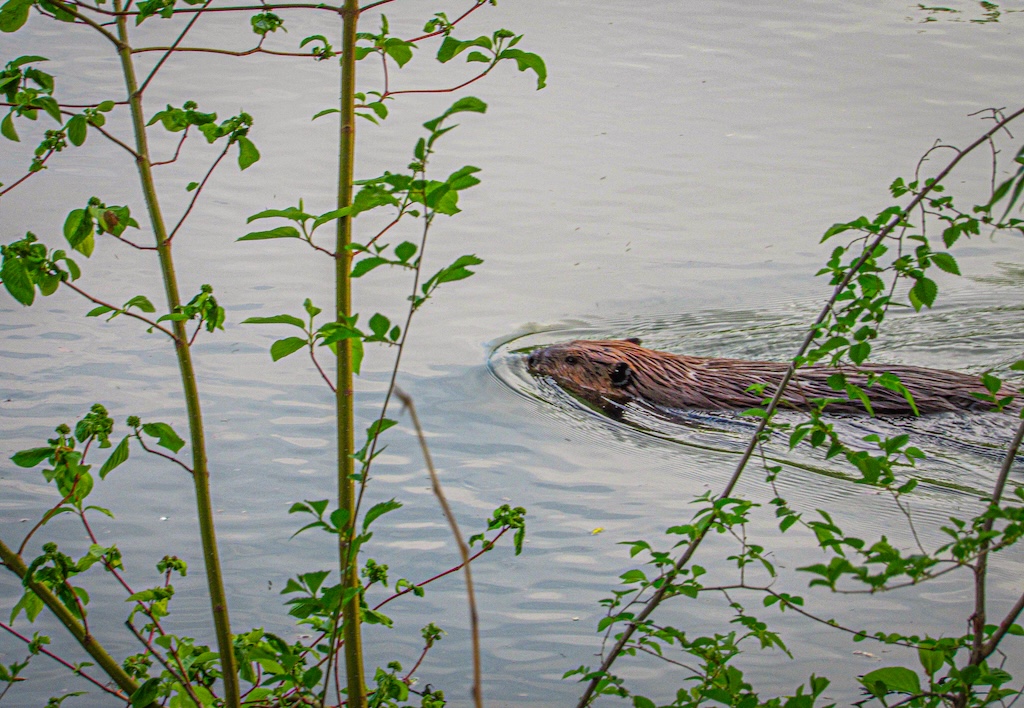
The North American beaver (Castor canadensis) has lived across North America for thousands of years, but were nearly hunted to extinction by late 1800s due to the demands of the unregulated fur industry. Today, though, the beaver population in North America is on the rise, which is good news for us.
Beavers are among the largest rodents in North America, weighing an average of 40 pounds and reaching up to three feet in length (including tail). Beavers always live near water with access to dam-building materials, like trees, branches, and mud. As semi aquatic rodents, they are strong swimmers from day one and can hold their breath underwater for about 15 minutes. The lifespan of a beaver in the wild is between 16 and 24 years.
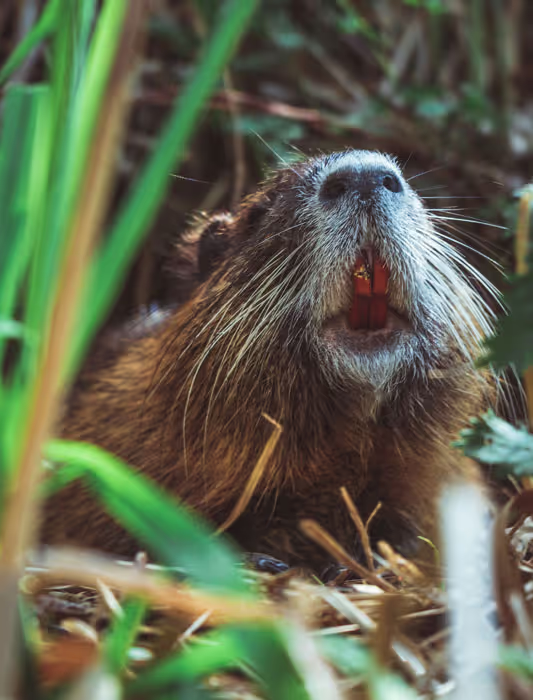
Like all rodents, beavers have teeth on their upper and lower jaws that are continuously growing, so they are able to gnaw away without wearing them down (in fact, the frequent gnawing and biting actually sharpens their teeth). Their four front teeth, the upper and lower incisors, are long and separated from the rest of their dental arch, creating the characteristic “buck teeth.” Behind the front teeth, beavers have a second layer of lips, which act as a barrier and prevent them from swallowing too much water or splinters.
Beavers have 20 teeth, including the four front incisors and an additional 16 molars behind them, which are used for grinding. The front four incisors have iron in their enamel, creating the orange color and making them stronger and more resistant to stress and impact. The iron-rich enamel also makes these teeth more resistant to acid. In fact, a study that compared enamel that had been treated with iron and fluoride found the iron-treated enamel to be even more resistant to acid than enamel treated with fluoride.
It’s not just their trademark buck teeth that make beavers so efficient at gnawing down trees and building dams. Their whole body seems built for the task. To start, their beady little eyes have three sets of clear eyelids, which protect them from branches and twigs while also allowing them to see underwater. Beavers also have large webbed hind feet, providing strength when swimming and stability on land during tree cutting. Their front, hand-like paws have five dexterous toes that can grasp logs and manipulate objects with ease. When in water, beavers’ flexible and scaly tails help regulate their body temperature and also act as “rudders” when swimming and diving. On land, their tails provide additional balance and support.
The dams that beavers build help create entire ecosystems, restore rivers and streams, improve water quality, and even help combat climate change. A healthy beaver population also brings increased biodiversity, regulated stream flows, salmon and trout recovery, restoration to eroded areas, and additional benefits to surrounding watersheds.
Sources
“Acadia’s North American Beaver.” National Parks Service. https://www.nps.gov/articles/north-american-beaver-acadia.htm. Accessed 14 August 2021.
“Beavers (Castor Canadensis)” Washington Department of Fish and Wildlife,https://wdfw.wa.gov/species-habitats/species/castor-canadensis#desc-range. Accessed 12 August 2021.
Cassel, James. “Wood You Believe It? Beaver’s Remarkable Teeth for Building Ecosystems” Tufts University. https://sites.tufts.edu/earthstewards/2021/01/19/wood-you-believe-it-beavers-remarkable-teeth-for-building-ecosystems/. Accessed 15 August 2021.
Intagliata. Christopher. “Beaver Teeth have Iron Advantage.” Scientific American. https://www.scientificamerican.com/podcast/episode/beaver-teeth-have-iron-advantage.Accessed 15 August 2021.
Photo 1 by Max Saeling on Unsplash
© Holly Duffy, August 2021
Touch whale bones, examine shipwreck artifacts and connect with the coast's living history.

Support our mission, get involved in educational programs, or contribute through donations and volunteering.