Marine Life
Gray Whales Off Washington's Coast
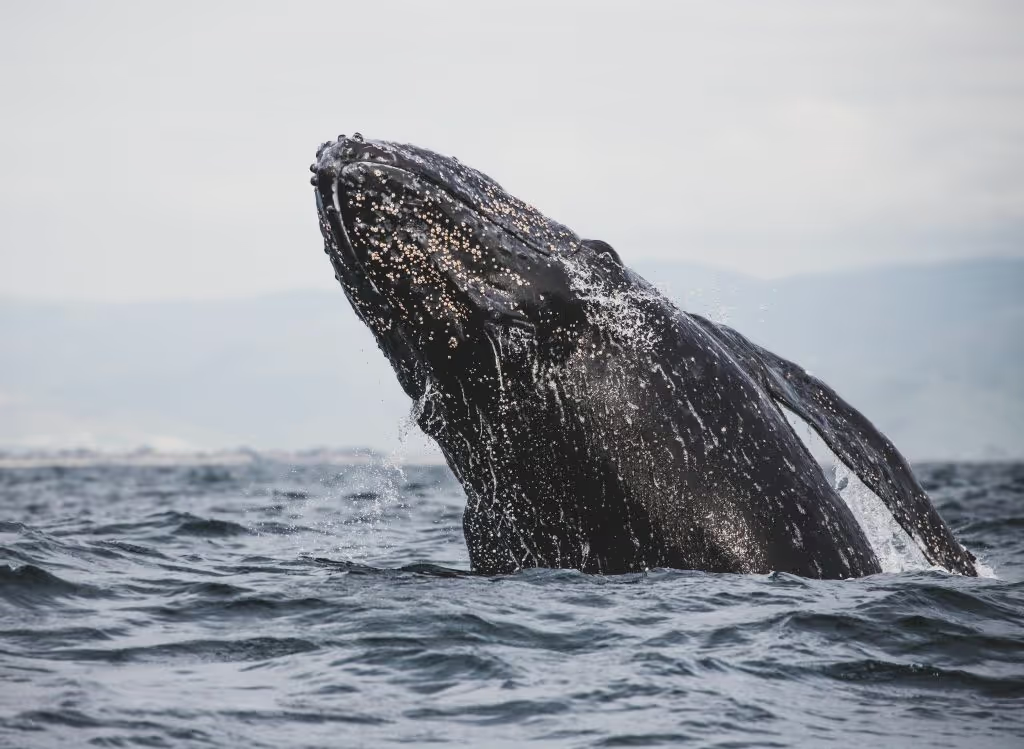
"Thar’ she blows!" hollered the whale spotter. The year is 1920-something, and a thunderous roar from a discharged whale gun succumbs to an eerie silence as another whale becomes victim of the hunter’s piercing harpoon. But it’s a glancing blow. As one of the gunner’s legs becomes entangled in the line attached to the spear, he is swept out to sea. As the whale now turns back towards the ship, he begins to violently strike back at the whalers by destroying their death vessel with its large tail flukes. It appears this gray whale (aka “devil fish”) will foil one of the last few successful whale hunts in and around Grays Harbor. As the plot thickens, so does the blood in the veins of whalers as their ship slowly sinks and all lives are lost.
For centuries, whales were relied upon for supplying us with food, fuel, lubricants, and cosmetics among other things including shoring up women’s waistlines with whalebone corsets. As synthetics began replacing raw materials and alternative fuel sources were being discovered, whaling began to decline. Another factor in reduced whaling was the decline of many whale species, which brought a public awareness from around the world. A conservation strategy was implemented by the International Convention for the Regulation of Whaling (ICRW), an international alliance, extending an invitation to nations to ban hunting on a volunteer pact.
From the small pink and fresh-water dolphins to the mighty 100-foot blue whale, cetaceans have intrigued us for millennia. While Hollywood has embraced us with Flipper the friendly dolphin, Willy the Orca seeking liberation from aquarium life, and even a Star Trek movie with a premise on saving humpbacks. Biblically speaking, Jonah was swallowed by a whale. And we must never forget Moby Dick. But we have come to know the gray whale.
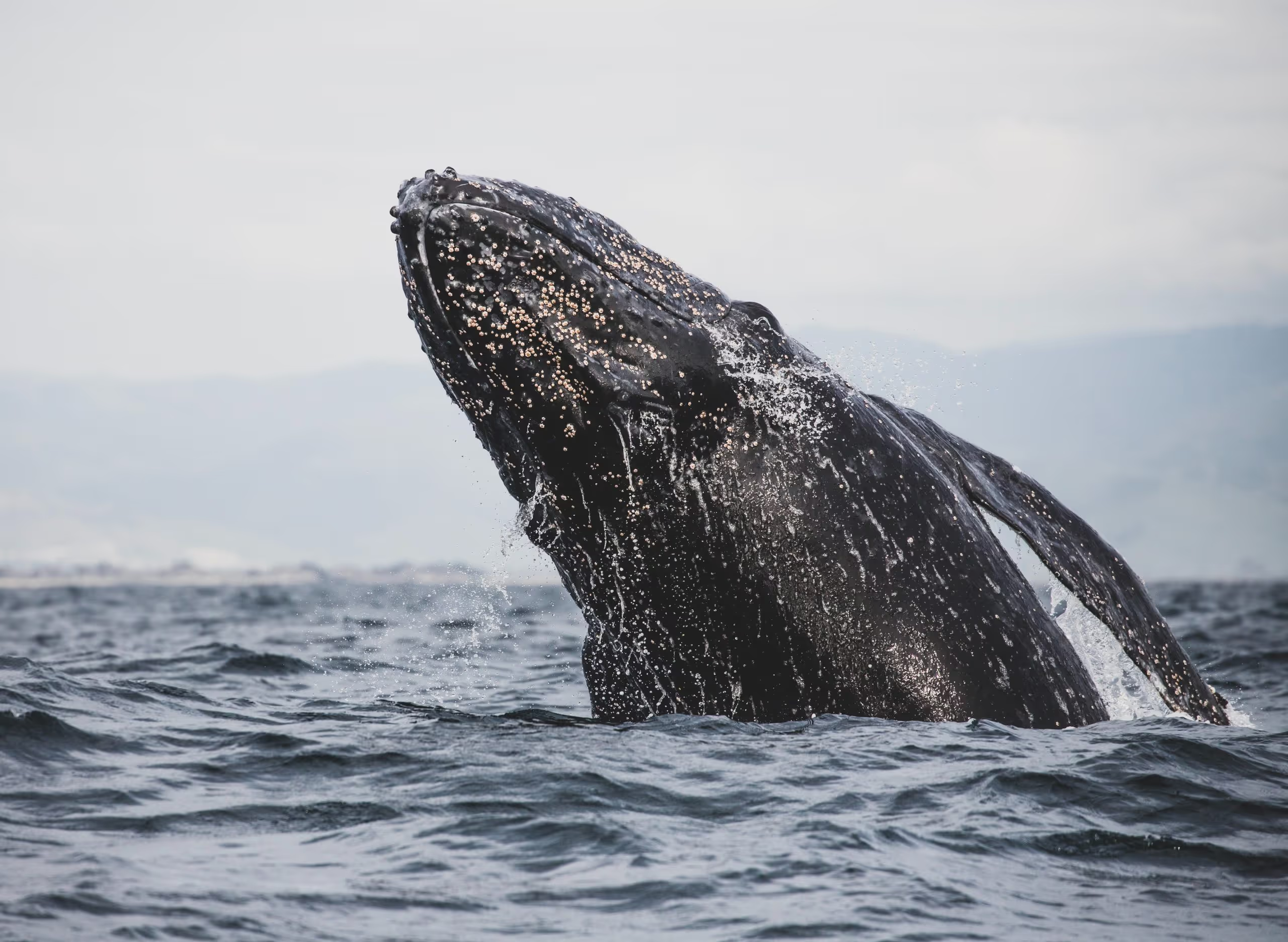
Gray whales belong to the order Cetacea, which includes dolphins and porpoises. Grays weigh in at 40 tons or more, with a length of over 40 feet as well. With a lifespan of 40 to 60 years, they are primarily a bottom feeder, feeding on benthic amphipods, other crustaceans, and even fish. After a gestation period of 12 to 13 months, mothers bear a single calf in and near Scammon’s Lagoon in Baja California. Migration begins in the spring as the whales travel north toward the Bering Sea, with the mothers leaving shortly after the calves are nourished and strong enough for the journey.
With the Western North Pacific stock believed to be near, if not already, extinct, our Eastern North Pacific stock remains stable at roughly 25 thousand or more. Feeding and avoiding predation of their young by Orcas, grays keep relatively close to the shoreline for all to enjoy, especially near our jetty right here in Ocean Shores.
Locally, whale advocates, among others, have expressed concern over the aerial spraying of carbaryl, a pesticide that eradicates a percentage of ghost shrimp (whale food) which prey on local shellfish, by local growers of oysters and clams from Willapa Bay to Grays Harbor. A less invasive spray was introduced with an aerial spraying near the Ocean Shores airport last August with results pending.
As whales still recover from centuries of over-harvesting, we are faced with new challenges with the rise of oil spills, plastic, ocean acidification (another story in itself), crab pot entanglements, ship strikes, and lack of food, continued obstacles will be bestowed upon our gentle giants for years to come if we don’t respond.
Now, therein lies a personal responsibility far inland as well as on the high seas. With recycling, responsible consumption, activism and education, we can remain hopeful that our grandchildren can enjoy the closest thing in size to a dinosaur they’ll ever witness, and that’s no whale’s tale!
© Steve Green, March 2015
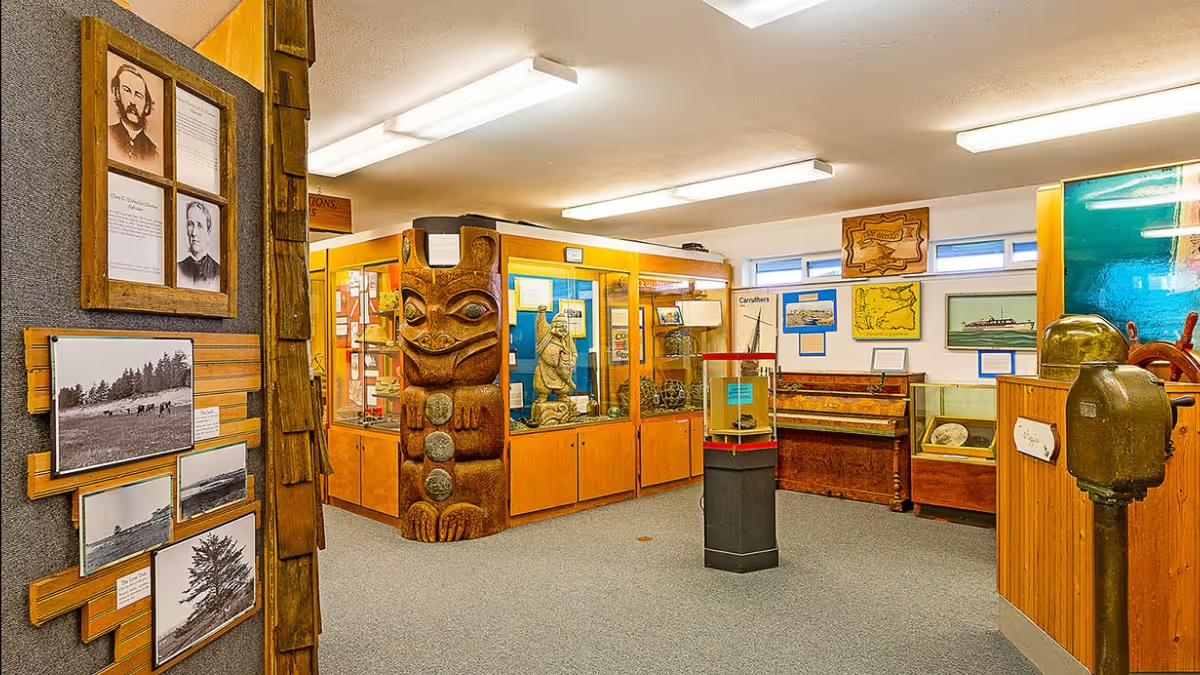
Touch whale bones, examine shipwreck artifacts and connect with the coast's living history.

Support our mission, get involved in educational programs, or contribute through donations and volunteering.