Biodiversity
GOT MOSS?
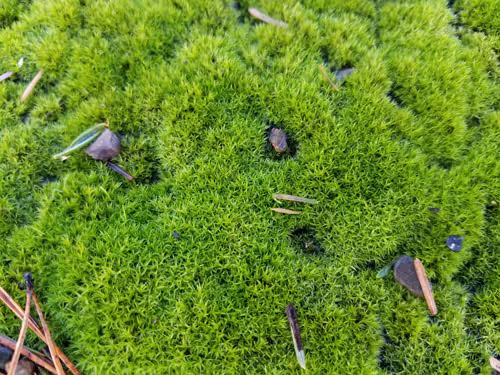
My gosh, what happened? My normally dark asphalt driveway is turning green! Is this happening to you, too? What the heck IS this stuff!
“Green” usually means “plant” and this was no exception. Let’s check this out…
Sure, you’re saying to yourself it’s moss. And you’re correct…but WHICH moss?
According to the Revised Plants of the Pacific Northwest Coast by authors Pojar and Mackinnon, approximately 700 species of “true mosses,” as opposed to “peat mosses,” grow in the Pacific Northwest at all elevations. Luckily for us, mosses are more “showy and noticeable at lower elevations in coastal rain forests.” While Ocean Shores isn’t really in a rain forest, we’re close.

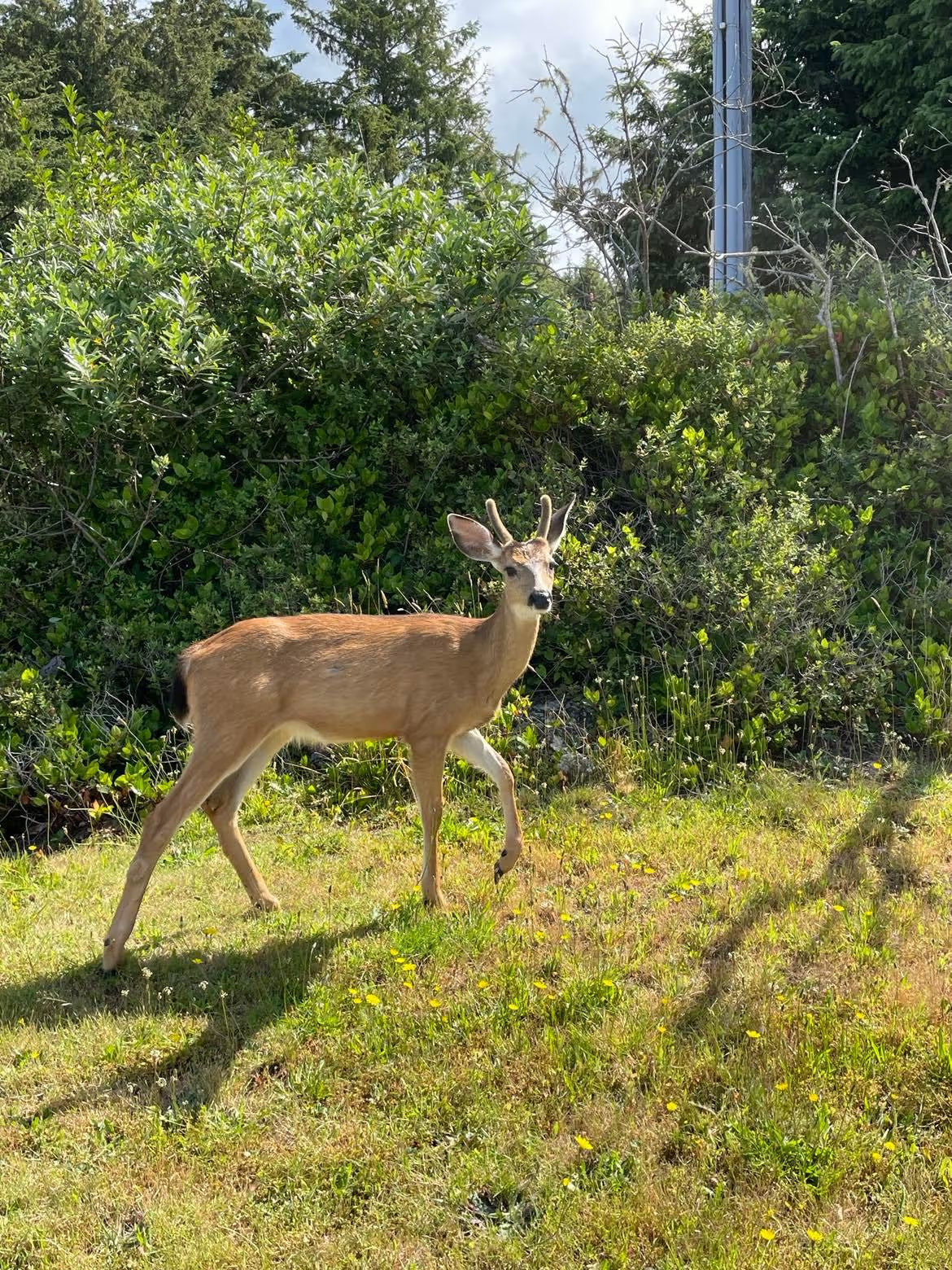
So, what is a “moss?” Here’s an interesting point: when we say “moss” we’re thinking of it as one plant, but it’s not. A single moss can be microscopic! When we see a patch of green and think of it as “moss” we’re seeing a colony of many, often tiny, plants growing all together. I guess you could say “moss” is like “deer,” it can be a single or it can be a multiple.
Moss is in the Bryophyta phylum in the plant world. This phylum also includes Liverworts and Hornworts. Growing throughout the world, Bryophytes date back 450 million years and are one of the oldest plants. In fact, they developed 50 million years before ferns, one of the earliest vascular plants!
Because moss do not have well-defined vascular systems to transport water and nutrients, this results in small plants flourishing in wet or moist places. To aid in survival, they have the unusual ability to dry out but quickly resuming photosynthesis after rehydrating. Coincidentally, for such simple plants, the life cycle, involving spores, eggs, and various stages, is rather complicated.
Are mosses “good plants?” Generally found in shady moist locations such as woodlands, alongside waterways and in forests on the ground and on rocks and trees, they are an important part of the habitat. They break down the surfaces to release nutrients for the encroaching plants and control soil erosion.
It’s important to note while mosses seem to be everywhere, many plants called moss are not moss. These include the “north side moss” which is an alga as is “Irish moss.” Spanish moss is an air plant and club mosses are in the fern family. Beard moss, Iceland moss, Oak moss and Reindeer moss are lichens which we’ll meet in a future blog.
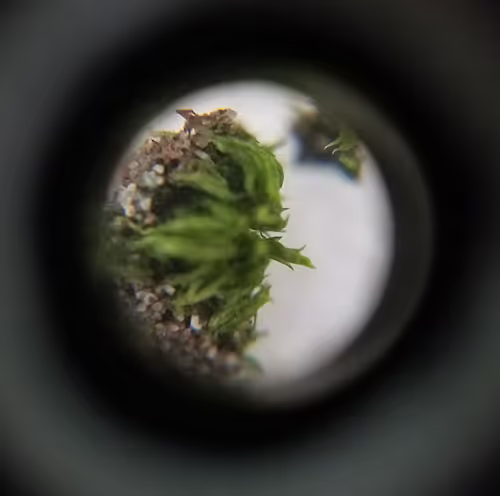
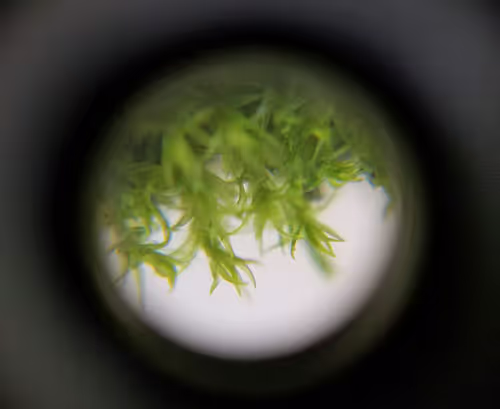
But what moss is taking over my rough driveway? Remember, there are approximately 700 species of true mosses in our area. Some of the many ways of finding the differences include the distinct types of hairlike structures covering the stems, the absence or presence of leaf midribs, the curve of the leaf blades (some are only 1 cell thick!) and the cellular structure holding the leaf to the stem. In other words, break out the microscope or magnifying lens!
I think my driveway is hosting the Bottle Moss. It could be Amphidium lapponicum which is a light green, pillowy and dense cushion, about ½ inch tall. Bottle Moss grows in rock crevices where it dries out and looks contorted but quickly resumes its cushion look when wet. However, it could be a close relative, Amphidium mougeotii. The first is bisexual, and the latter is unisexual with narrower leaves.
I decided not to intrude into its privacy and will just report my driveway has a nice coating of bottle moss.
And, because it’s so pretty, I may decide to use it and create a small moss garden in a shallow garden pot. And that, my friendly readers, could be my next blog…watch for it.
© Jacqui Austin, January 2021
Touch whale bones, examine shipwreck artifacts and connect with the coast's living history.

Support our mission, get involved in educational programs, or contribute through donations and volunteering.