5 Fun Facts about the Banana Slug
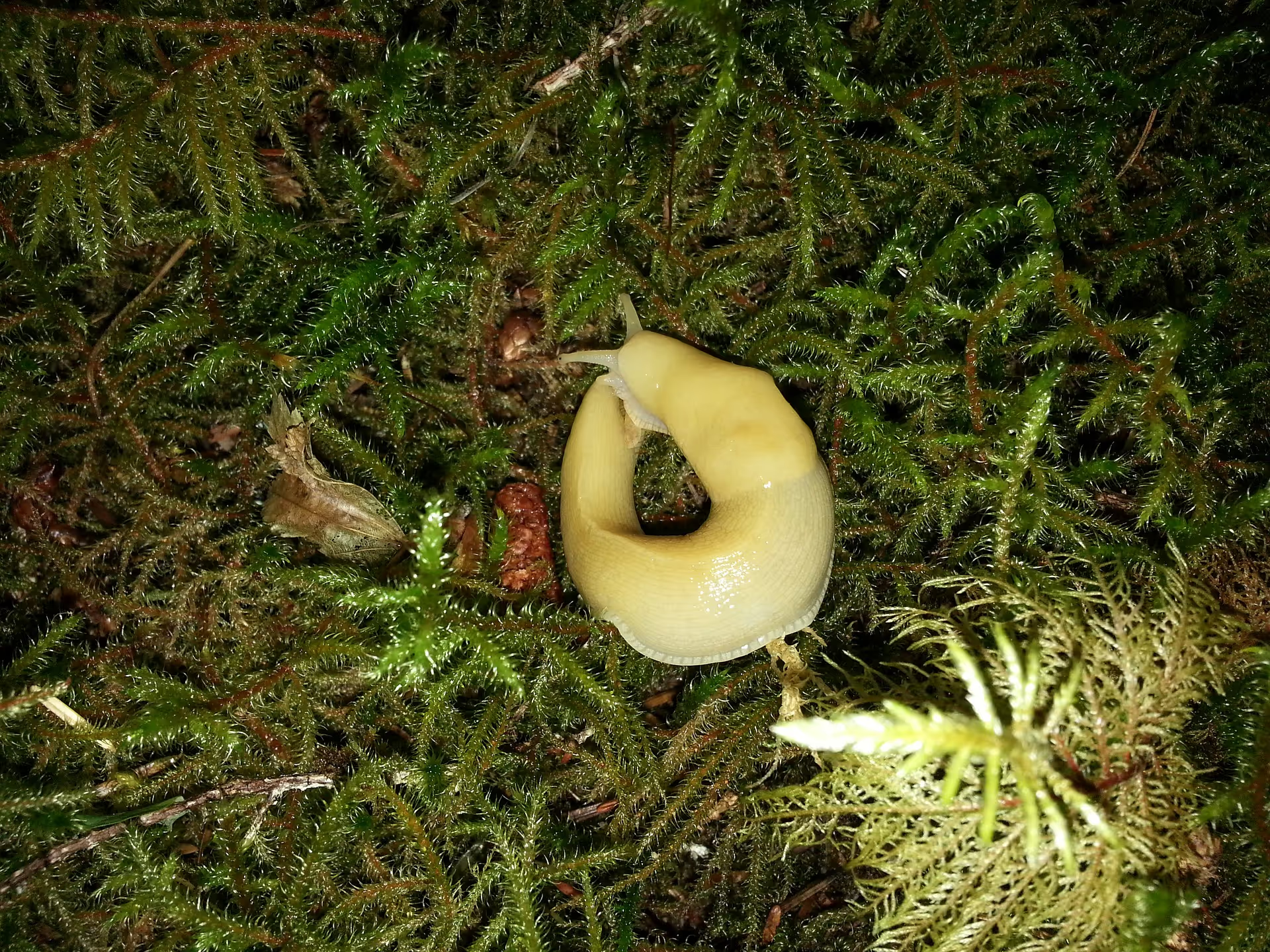
The Pacific Northwest’s dense and damp forests are home to the Pacific banana slug, a subspecies that was named after its resemblance to a banana. As its name suggests, the banana slug is often bright yellow in color, resembling a banana, but a banana slug can also be brown, white, or green. A banana slug can live up to seven years and can reach up to ten inches in length and four ounces in weight, making it the second-largest slug in the world!
Here are 5 fun facts about the banana slug:
- The banana slug is one of the slowest moving creatures on earth. Reaching top speeds of six-and-a-half inches per minute, a banana slug is extraordinarily slow. It moves by contracting and relaxing its “muscular foot” (the bottom side of the slug). The banana slug uses the mucus plug that extends from its tail to slow itself down as it descends from tall trees and plants in the forest.
- A banana slug’s slime serves a many essential purposes.As a banana slug excretes mucus, it creates a slimy surface to travel on. While the slime helps the banana slug move along, it actually has the reverse effect on many predators. Common predators, like salamanders and garter snakes, will get slowed down if they hit a trail of sticky banana slug slime. Scientists have studied banana slug slime when creating medical adhesives, partly inspired by the slime’s ability to impede predators while also allowing the slug to glide along.
If a larger predator, like a raccoon, licks a banana slug, the slimy surface will cause its tongue to go numb. This numbing effect is unique to banana slugs and most predators are susceptible. If you pick up a banana slug without gloves, there is a good chance your fingers will go numb for a while!
- Its unique slime starts out as dry granules. Like all slugs, a banana slug needs to stay moist in order to survive, and the mucus that helps it travel and ward off predators, helps in this area as well. Banana slug mucus is engineered to make the most of its wet surroundings and can hold up to 100 times its weight in water, but it begins as a dry granule. A banana slug excretes mucin as a dry granule that becomes slimy when it comes into contact with water—something that happens almost constantly on a damp forest floor!
- A banana slug will eat almost anything! A banana slug’s magical slime also helps it find food. As the slug travels, its sticky slime catches surrounding debris. The debris slide along the slug until it can turn around and eat it. In addition to anything it catches in its slime, a banana slug will eat fallen leaves, animal feces, moss, mushroom spores, and dead organic matter. As it digests its food, the banana slug creates a nutrient-dense waste that fertilizes the surrounding soil.
- Banana slugs are natural masters in disguise. Light conditions, overall health, and diet help determine a banana slug’s coloring. With the majority of its food coming from the forest floor, a banana slug is able to camouflage itself to its surroundings with ease. A banana slug’s trademark yellow coloring helps it blend in with its environment, as it hides in plain sight amongst fallen lives and pine needles that cover the forest floor.
Sources
Image by Sean Bennick from Pixabay.
Cassidy, Josh. “Banana Slugs: Secret of Slime,” KQED: https://www.kqed.org/science/27260/banana-slugs-secret-of-the-slime. Accessed 17 July 2022.
Heimbuch, Jaymi. “10 Slimy Facts about Banana Slugs.” Treehugger: https://www.treehugger.com/slimy-facts-will-change-how-you-look-banana-slugs-forever-4863231. Accessed 17 July 2022.
McQuate, Sarah. “He Slimed Me!” Scientific American Blog: https://blogs.scientificamerican.com/guest-blog/he-slimed-me/. Accessed 17 July 2022.
© Holly Duffy, July 2022