Nature
Garter Snakes
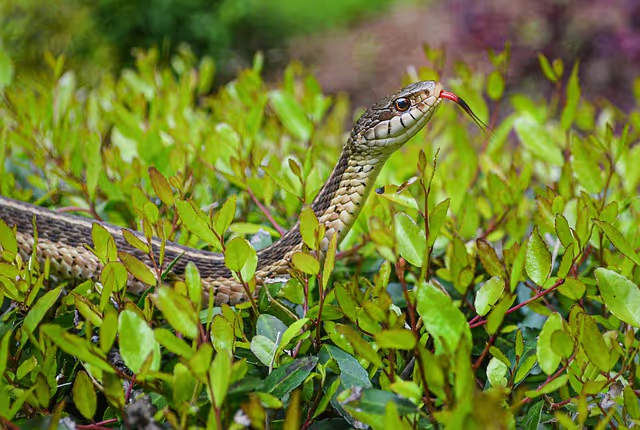
Garter Snakes are one of the most common snakes in North America. They can be found everywhere from Canada to Florida, and Western Washington is no exception. They are described as being "generalists" that inhabit a wide array of habitats. You will find them in grassy knolls, woodlands, and meadows. In the more arid parts of the American West, you will also find them in areas near bodies of water. They are generally harmless, which allows them to be kept as pets. With that said, some species do have a neurotoxin venom. Unlike the Western Rattlesnakes that call Central and Eastern Washington home, the venom is mild and not overly harmful to humans. At worst, their bite will cause minor itching or swelling. However, as long as the bite is thoroughly cleaned, it is not a cause for concern. Allergic reactions to the saliva produced in the bite have been known to occur, but cases are extremely rare. The most common species of Garter Snake that you will likely see in Western Washington is Thamnophis sirtalis (also known as the Common Garter Snake). Common Garter Snakes generally have three white, green, yellow, or blue stripes running down the lengths of their bodies, which are generally olive or brown in color. Their heads are darker than their bodies.
Some people find the name "garter snake" to be humorous. Doug Wechsler, a wildlife biologist at the Academy of Natural Sciences of Drexel University in Philadelphia and the author of the book Garter Snakes, says that one possible reason for their name is that "their stripes resemble garters men used to wear to hold up their socks." A second theory is that the name is a "corruption" of the German word for “garden.” They are sometimes called "garden snakes" by mistake. It isn't known why, but if I were to wager a guess, it's probably because the words "garter" and "garden" sound similar.
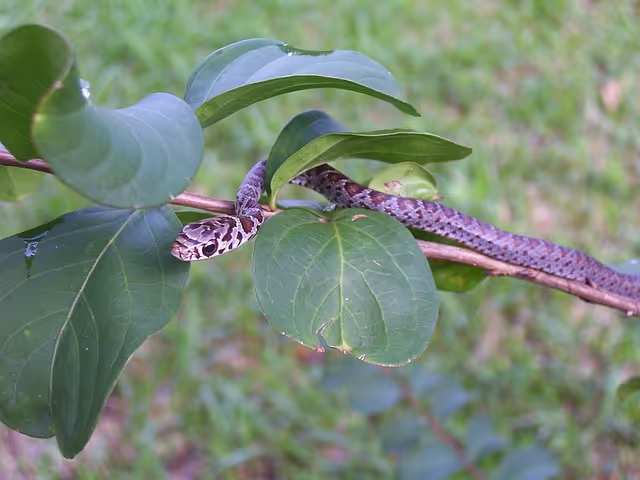
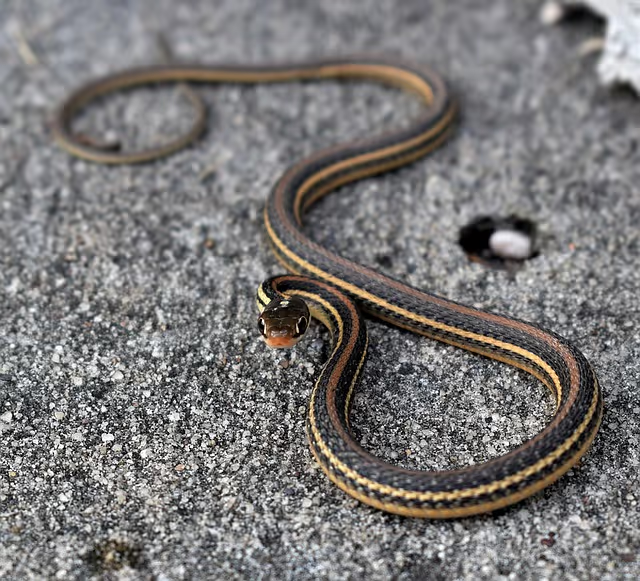
Garter Snakes come in a wide array of colors that vary by species. Most of them have three longitudinal stripes. One is located on the centers of their backs. Two more are located on the lower sides of their bodies, with one stripe on each side. In most species, the stripes are greenish or yellowish in color. However, this varies by species and the region in which the species calls home. Some garter snakes have detailed splotchy patterns between their stripes, which gives them a checkered look. Others do not, as some are "virtually stripeless." Garter Snakes can also vary in size. They are normally on the small side, coming in between twenty-three and thirty inches (fifty-eight and seventy-six centimeters). However, some can grow to be five feet long (one and a half meters). They are “slender to moderately stout-bodied ... [with scales that are] obviously keeled." This means that they have a ridge down the center of the bodies. Many species of Garter Snakes also have two colored tongues.
Garter Snakes are normally active during the day. They move quickly and are highly terrestrial, meaning that they largely stay on the ground. However, they can get around to other environments. Some species climb vines and shrubs, while others are good swimmers and spend time in bodies of water. When they are threatened, Garter Snakes give off a musk that is notorious for its foul odor. Because they are small, Garter Snakes have many predators. They include crows, bullfrogs, hawks, raccoons, foxes, and squirrels. In cold climates, Garter Snakes hibernate during the winter. They spend the cold weather months in dens that house large groups of snakes. Sometimes, a den will feature hundreds of Garter Snakes. On occasion, other snake species will also live in these dens. Garter Snakes will travel long distances to these dens for hibernation, so if you're in a colder climate, you may go many months without seeing them.
Garter Snakes' diet mostly consists on earthworms, fish, and amphibians. They render their pray unable to move with their quick reflexes sharp teeth. The same mild neurotoxin that is harmless to humans causes paralysis to the small prey, making them easier to swallow. Like other snakes, Garter Snakes generally swallow their food whole. However, some larger prey can't be swallowed whole, and may have to be dragged and chewed until the trauma finally kills them.
The best environments for Garter Snakes to mate occur “when they emerge [from hibernation] in the spring and also when they congregate again in fall." This is because they are already in one place for hibernation and do not have to use their energy to seek mates. However, female Garter Snakes in more temperate areas where they don’t hibernate have to rely on pheromones to attract males. Dozens of males will typically come to one female. This cluster of mating snakes is known as a “mating ball.” Some males resort to trickery to confuse their competition and prevent them from winning over the female in question. They do this by secreting female pheromones, which lure other males towards them instead of the female. After the other males are away from the mating ball, the males that are posing as females will quickly make their way back to the female to attempt to mate. Garter Snakes are ovoviviparous. This means that they produce live offspring. After mating, females store sperm in their bodies until they are ready to fertilize their eggs. Garter Snakes give birth to anywhere from twenty to forty live young at a time. Parent snakes do not care for their young, instead leaving them to fend for themselves.
Reference
© Ian D. Caldwell, August 2020
Touch whale bones, examine shipwreck artifacts and connect with the coast's living history.

Support our mission, get involved in educational programs, or contribute through donations and volunteering.