Nature
Foxgloves
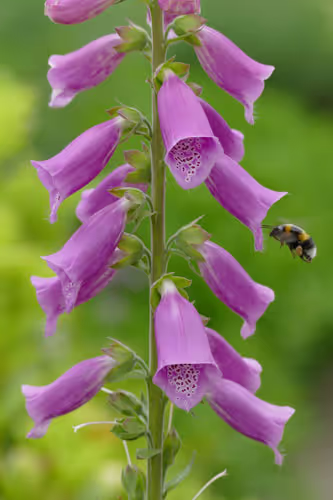
Foxgloves are tall, striking flowers. Their blossoms are tubular in shape with speckled throats. The foxglove is a biennial plant. This means that they form a rosette and leaves in their first year, bloom in their second year, and die after that. They can grow to between two and five feet in height, and one to two feet in width. Their pink, red, white, yellow, and purple blooms can be seen in the early summer months. Foxgloves are native to Europe and Northwest Africa, but can be found here in the Pacific Northwest as well. They reseed easily, with each plant capable of producing one to two million seeds each.
Foxglove's botanical name is "Digitalis purpurea." The scientific genus name "Digitalis" refers to the fact that Foxglove flowers are almost the right size to slip your fingers into, as the Latin translation of digitalis is "measuring a finger's breadth." However, you should not slip your fingers into Foxgloves or touch them in any other way. That is because they are poisonous. Ingestion of Foxgloves can result in symptoms ranging from nausea to cardiac arrhythmia. Deer and rabbits also don't like Foxgloves because of their toxicity. Despite this, Foxgloves aren't entirely dangerous. Their leaves were used in the eighteenth century to help treat heart failure. They were also once the source of heart stimulants. Additionally, hummingbirds like the nectar that Foxgloves produce. Foxgloves are known by three other common names: Witches Glove, Fairy Bells, and Dead Man's Bells.
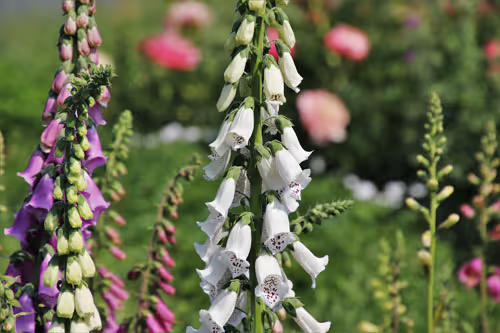
Foxgloves can be a tall, colorful addition to backyard gardens. They prefer moist, well-drained soil that has a high amount of organic matter in it. If your soil isn't rich, you can still grow Foxgloves by adding compost and mulching the area where you want to plant them well. They grow best in places that have full sun with light afternoon shade. Once they mature, they tolerate dry shade, but don't like full shade. In flower beds, Foxglove can grow up to five feet tall. As a result, they generally look best at the back of the flower bed. They should be planted while temperatures are still slightly cool, before the heat of the day.
Foxgloves generally do better in cooler temperatures. Their seeds will germinate when temperatures reach 70-80 degrees Fahrenheit. Temperatures of 90 degrees Fahrenheit or higher may cause the plants to wilt. Foxgloves do not have any humidity requirements. However, they do need good air circulation. This can be achieved by spacing the plants at least two feet apart. If your Foxgloves are on the tall side, stake them so that they won't flop over in wind storms.
Foxgloves reseed themselves abundantly. Each plant can produce one to two million seeds. As a result, you will want to stay on top of them to ensure they don't completely consume your garden. Using them as cut flowers can be an attractive way to decrease reseeding while bringing some color into your home. If you want additional foxglove plants for the next year, leave the last flowers of the season to dry on the stalk. They'll drop the seeds needed to grow new plants before dying out. Once they start growing, you'll want to thin the seedlings so that they are about 1.5 feet apart. This will give them enough room to grow and flourish.
References
© Ian D. Caldwell, August 2020
Touch whale bones, examine shipwreck artifacts and connect with the coast's living history.

Support our mission, get involved in educational programs, or contribute through donations and volunteering.