Marine Life
Fish-eating Anemone
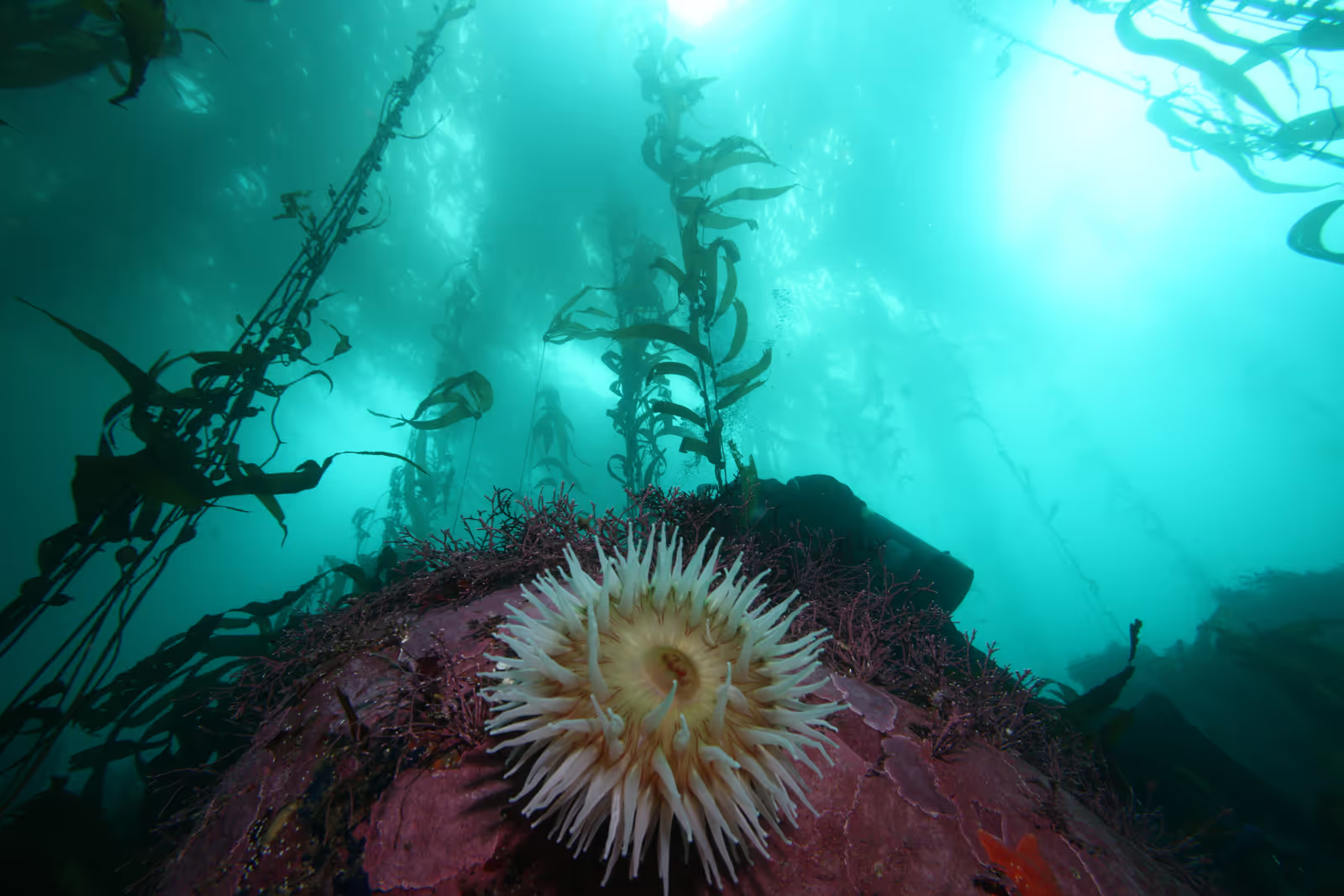
Fish-eating anemones (Urticina piscivora) are large anemones that can be found in the Eastern Pacific Ocean from Alaska to Southern California. They can sometimes be found in the intertidal, but are usually found in the subtidal up to 160 feet (50 meters) deep. They prefer rocky substrates with a current, often in kelp forests. They may also be found on pilings.
They have a solid red or orange column with no bumps and a sticky foot on the bottom. It is topped by an orange-gold oral disk with “red markings surrounding the base of each tentacle and arranged in a radiating pattern from the center” (SIMoN 2023). The disk is edged by tentacles that are white and can be tipped with red or pink. Younger anemones may have red or pink banding on their tentacles. They can grow up to 8-10 inches (20-25 cm) in height and disc diameter (Aquarium of the Pacific n.d., SIMoN 2023). The tentacles can add another 2-4 inches (5-10 cm) to their overall size.
Fish-eating anemones are generally solitary. They will stay in one place if there is enough food available for them, but are capable of moving if there is not. They move by inflating themselves, then detaching themselves from the substrate and moving with the current (Aquarium of the Pacific n.d.).
Like their common name suggests, fish-eating anemones prey on small fishes, along with shrimp and other invertebrates. These anemones have specialized cells in their tentacles called nematocysts that consist of a coiled thread with a barbed end that contains toxins. To feed, they wait until their prey approaches their tentacles, and then they send out their nematocysts, which either kill or immobilize their prey. Using their tentacles, they move their prey to their mouths and into their digestive cavity. Undigested food and waste products are expelled through the mouth.
One small fish species they won’t eat is the painted greenling (Oxylebius pictus), which may be found safely associating with the anemone. They are preyed on by sea stars (Houtman et al 1997). Their stings can be harmful to humans (Fretwell and Starzomski 2014).
Fish-eating anemones can reproduce both asexually and sexually (NMSF 2020). They reproduce asexually by splitting either vertically or horizontally (Aquarium of the Pacific n.d.). The offspring are genetic clones of the parents and do not experience a full life cycle (NMSF 2020). They reproduce sexually by spawning eggs and sperm into the water. Once fertilized, they will develop into larvae that will float with the current. They eventually settle and metamorphose into juveniles and then adult anemones (NMSF 2020). They can live up to 80 years in the wild.
References
Aquarium of the Pacific. (n.d.). Fish-eating anemone. https://www.aquariumofpacific.org/onlinelearningcenter/species/fish_eating_anemone
Fretwell, K., & Starzomski, B. (2014). Fish-eating anemone • Urticina piscivora. Biodiversity of the Central Coast. https://www.centralcoastbiodiversity.org/fish-eating-anemone-bull-urticina-piscivora.html
Houtman, R., Paul, L. R., Ungemach, R. V., & Ydenberg, R. C. (1997). Feeding and predator-avoidance by the rose anemone urticina piscivora. Marine Biology, 128(2), 225–229. https://doi.org/10.1007/s002270050086
National Marine Sanctuary Foundation. (2020, March 20). Sea wonder: Fish eating anemone. https://marinesanctuary.org/blog/sea-wonder-fish-eating-anemone/
Sanctuary Integrated Monitoring Network. (2023). Fish-eating anemone urticina piscivora. https://sanctuarysimon.org/dbtools/species-database/species-info-ajax.php?sID=5
Image 1 © Chad King / NOAA MBNMS
© Laura Caldwell, September 2023
Touch whale bones, examine shipwreck artifacts and connect with the coast's living history.

Support our mission, get involved in educational programs, or contribute through donations and volunteering.