Insects
Common Green Darner Dragonfly
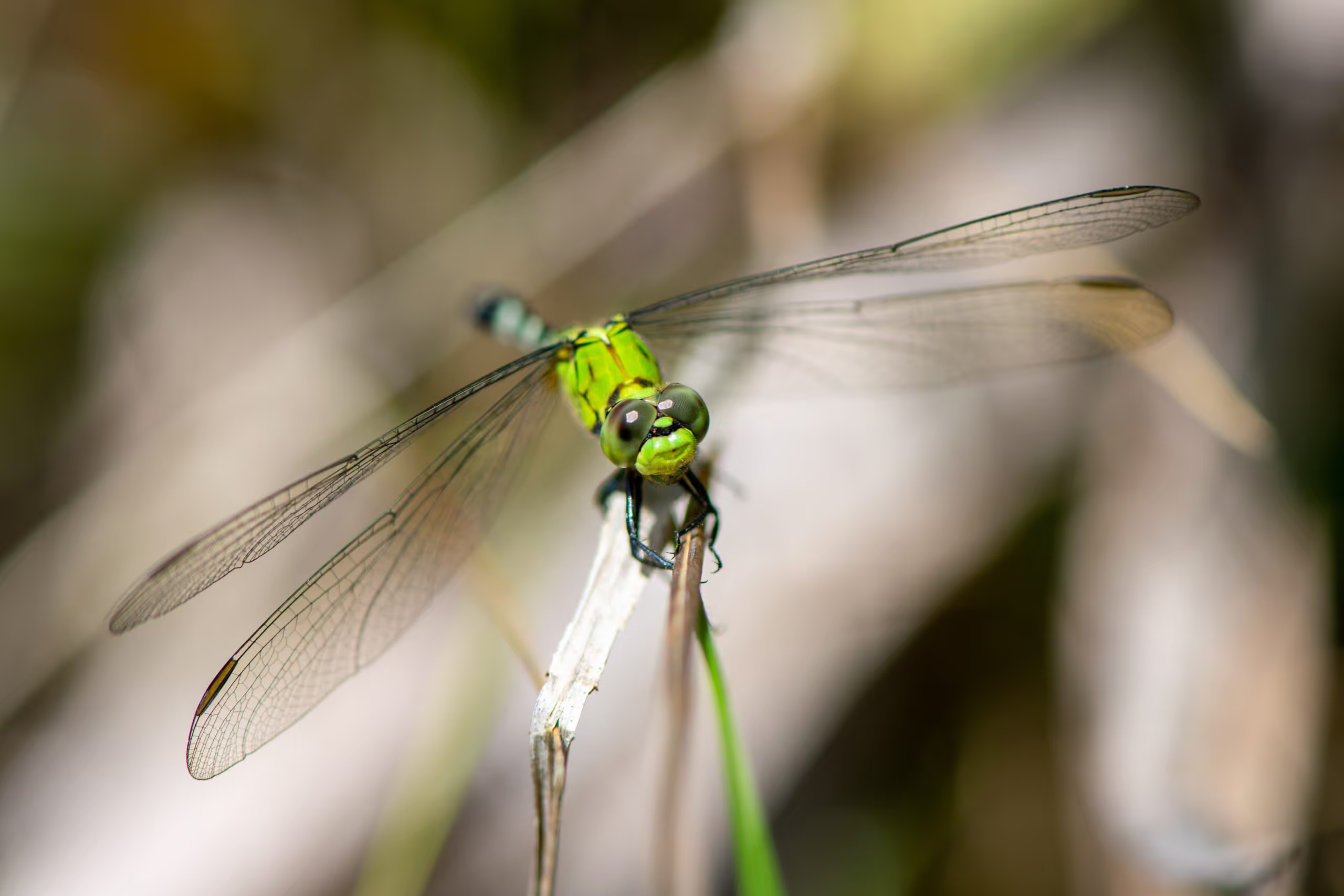
The state of Washington enacted RCW 1.20.047 on July 27th of 1997- declaring the common green darner dragonfly to be the official state insect.1 It was acknowledged as “a beneficial contributor to our ecosystem” as well as being “found throughout Washington and is easily recognizable”.1 While both are solid reasons to be named the official state insect, they don’t begin to address how interesting common green darners are.
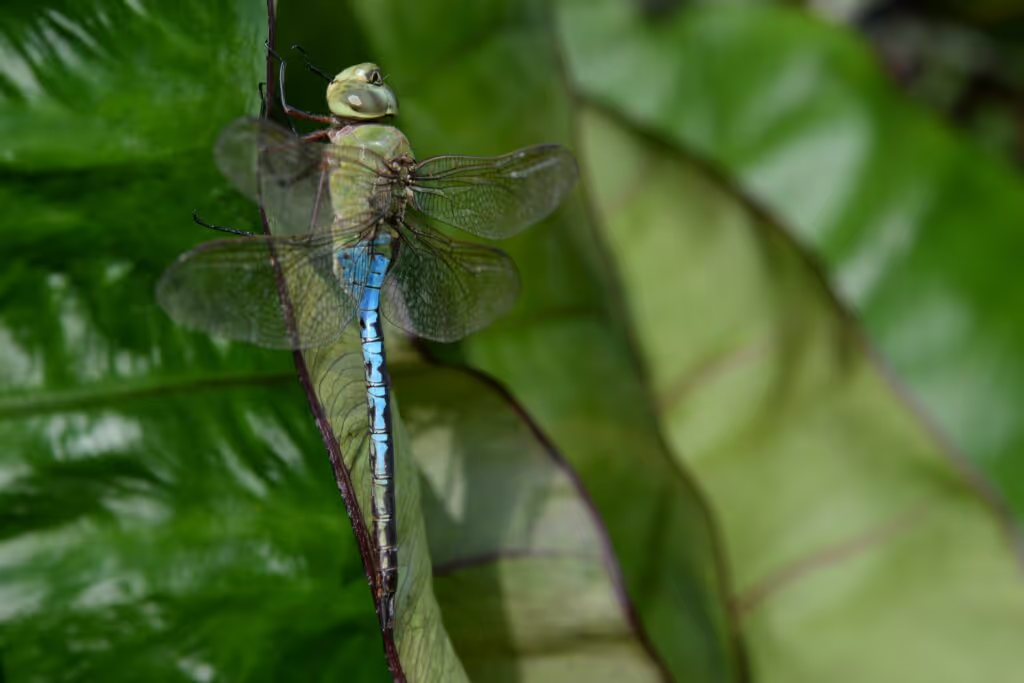
Common green darners (Anax junius) are a widespread species found in a variety of habitats ranging throughout most of the Nearctic region.2 While there are resident populations, the migrant adults commonly travel along coastlines, with dunes as beaches serving as desirable habitats.3 Migratory populations will fly tens of miles at speeds up to 30 miles an hour to hunt prey and have a maximum total migration of 1900 miles.3 They are most active from dawn to dusk and rest on vegetation throughout the night.
With large, well-developed eyes that wrap around their heads, dragonflies have excellent vision that can detect the smallest movements and see a wide range of colors including the UV spectrum.3 Their keen sight is also important for identifying mates. Once chosen, a male grasps a female by the head. If she chooses to mate, she will attach the tip of her abdomen to the male and grasp his abdomen establishing “wheel position” and the transfer of sperm occurs.3 The mating pair then flies in tandem and oviposit together on floating vegetation of an aquatic environment. Both males and females mate many times throughout their adulthood.3
Common green darner eggs hatch to produce nymphs (or naiads) seven days after being laid in an aqueous environment.2 Nymphs will spend one to five years underwater where they ravenously prey on aquatic insects, zooplankton, small fish, tadpoles, larval salamanders, and even other nymphs.3 They have specialized features that help them to be top carnivores in freshwater habitats without fish. The first is a large, hooked lower lip that can be shot out to catch prey in 1/100th of a second. In coordination with their gills, which are located in the rectal chamber, nymphs can suck in and eject water to propel themselves.4 While they are accomplished hunters, common green darners have a slew of predators including fishes, frogs, spiders, birds, robber flies and other dragonflies.3
After a nymph molts their skin nine to thirteen times throughout its development, the larva climbs out of the water and vertically perches on plant material to begin its transformation.3 It swallows air slowly, resulting in pressure that breaks apart its larval skin.2 Its wings unfurl and an enzyme is released that hardens its soft and vulnerable body.4 They can grow to as long as 8 cm, making common green darners one of the largest dragonflies.2 Once their color pattern deepens and they become sexually-mature adults, they only live a little over a month.4
Fossil records show dragonflies were alive in Paleozoic times, outdating dinosaurs by millions of years.4 Over time, common green darners earned nicknames such as “mosquito hawk” and “snake doctor” likely referring to their nature as adept mosquito hunters and the molting of skin as nymphs. Even the name “darner” is a nod to its long, slender abdomen that resembles a darning needle.4 Thankfully, common green darners are a species of “least concern” and have a stable population.5 They have ecological importance as they feed on mosquitos and agricultural pests and its hypothesized that dragonfly nymphs may serve as bioindicators of water quality.4 As spring progresses into summer, keep an eye out for these green and blue beauties near waterways and take a moment to appreciate the complex and intricate life cycle of our official state insect.
References
Photo references:
Common green darner dragonfly perched on a leaf. Photo by Laura Ockel on Unsplash.
Close-up of common green darner dragonfly on branch. Photo by Michael Barber on Unsplash
© Rachel Davey, May 2023
Touch whale bones, examine shipwreck artifacts and connect with the coast's living history.

Support our mission, get involved in educational programs, or contribute through donations and volunteering.