Plants
Cascara Buckthorn
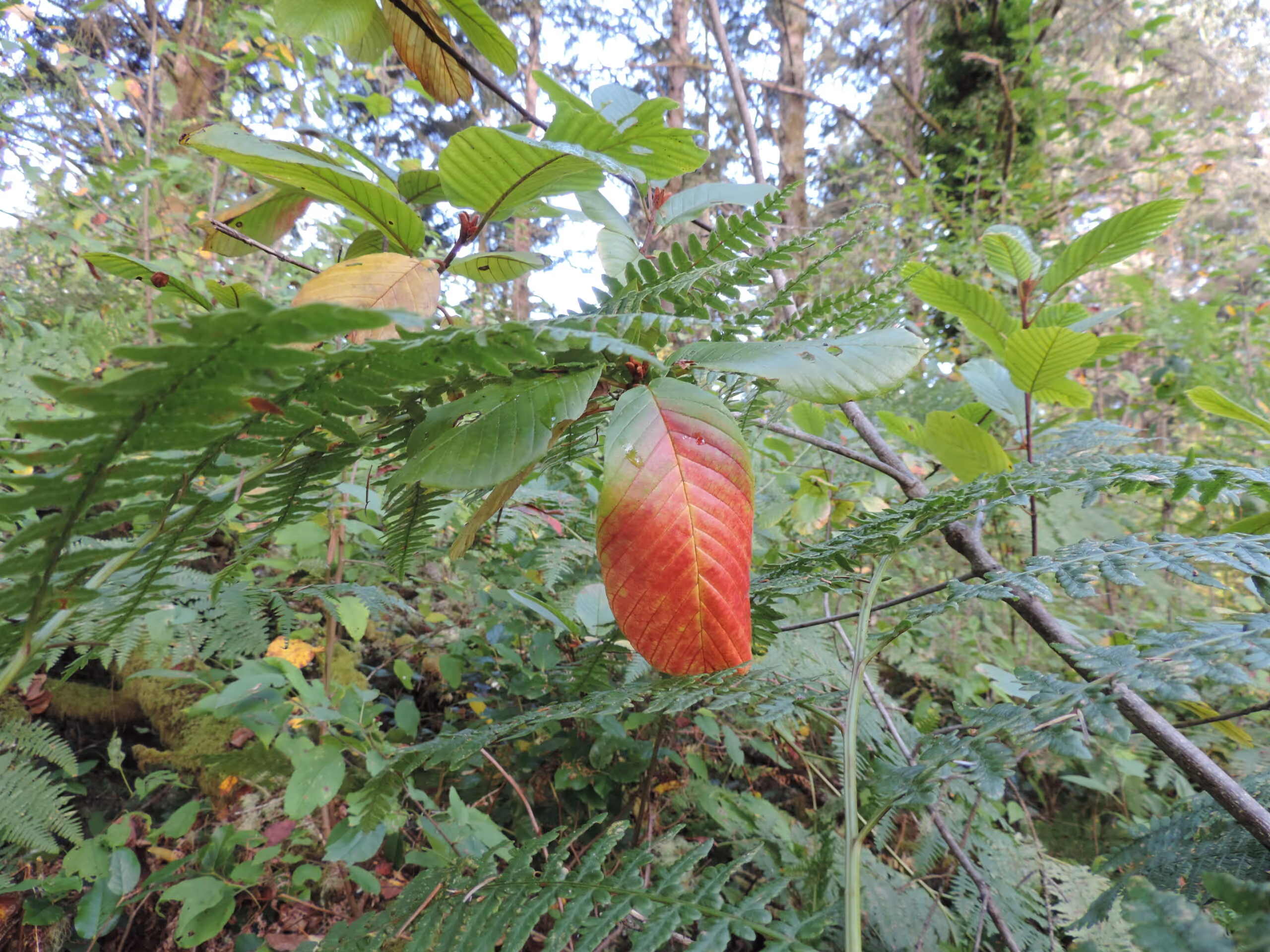
Cascara buckthorn (Frangula purshiana, formerly Rhamnus purshiana. Additional common names include chittam, chitticum, bearberry, cascara sagrada, or simply cascara) is a large shrub/small tree native to the Pacific Northwest. It ranges from British Columbia to northern California and east to northern Idaho and northwestern Montana.
It is primarily found in forested areas, though it can also be found in riparian areas, disturbed areas, or wetlands. It can grow up to 33 feet (10 meters) in height. It prefers moist soils and moderate to full sun, but can tolerate a variety of soil and sunlight conditions. The plant provides important thermal and hiding cover for animals (Habeck 1992).
The leaves are deciduous. They are dark green throughout the spring and summer. In fall, the leaves turn reddish-orange in color if the plant receives a fair amount of direct sunlight and they turn yellow if they grow in more shady condition (Grant, Verlinde, & Stanley n.d.). They are oval shaped with 10-12 lateral veins on both sides of the leaf. The edges have small teeth. The leaves are browsed by deer and elk.
Cascara buckthorn flowers during the spring. Flowers are white to greenish-yellow in color and 4-5 millimeters in diameter. They have five petals. Flowers bloom in the late spring.
The berries are dark purple in color and are 6-10 millimeters in diameter. The fruits contain about three seeds each (CNPS n.d.). The plant usually reproduces by seed, but can also reproduce by layering. Fruits ripen in the mid-late summer.
The berries are eaten by birds, black bears, and raccoons, with birds being one of the largest distributers of seeds (Habeck 1992). The fruits are bitter-tasting and animals that eat them can become bitter-tasting themselves (Grant, Verlinde, & Stanley n.d.). In humans, the berries are mildly toxic and can cause nausea, vomiting, and diarrhea if consumed (LBJ Wildflower Center 2023).
The bark is brown to silver-gray with light splotching. Native Americans, including the Coast Salish and Quileute peoples, used the dried bark as a laxative for centuries (US NLM 2017; LBJ Wildflower Center 2023). Cascara buckthorn is currently not FDA approved, but continues to be used in the manufacture of dietary supplements (Medline 2023). If chewed, the fresh bark is bitter-tasting a may cause numbness to the taste buds (Habeck 1992).
References
California Native Plant Society (n.d.). Cascara Sagrada, Frangula purshiana. California Native Plant Society. https://calscape.org/Frangula-purshiana-(Cascara-Sagrada)?srchcr=sc593c7003cf77f
Grant, M., Verlinde, S., & Stanley, G. B. (n.d.). Frangula purshiana ssp. purshiana. Washington Native Plant Society. https://www.wnps.org/native-plant-directory/233:frangula-purshiana-ssp-purshiana
Habeck, R. (1992). Frangula purshiana. Fire Effects Information System (FEIS). https://www.fs.usda.gov/database/feis/plants/shrub/frapur/all.html
Lady Bird Johnson Wildflower Center (2023, May 8). Plant database. Lady Bird Johnson Wildflower Center - The University of Texas at Austin. https://www.wildflower.org/plants/result.php?id_plant=FRPU7
U.S. National Library of Medicine. (2023, July 7). Cascara Sagrada. MedlinePlus - U.S. National Library of Medicine.. https://medlineplus.gov/druginfo/natural/773.html
U.S. National Library of Medicine (2017, January 23). Cascara - LiverTox: Clinical and Research Information on Drug-Induced Liver Injury. U.S. National Library of Medicine. (2017, January 23). https://www.ncbi.nlm.nih.gov/books/NBK548113/
© Laura Caldwell, November 2023
Touch whale bones, examine shipwreck artifacts and connect with the coast's living history.

Support our mission, get involved in educational programs, or contribute through donations and volunteering.