Birds
Are Robins an Early Sign of Spring?
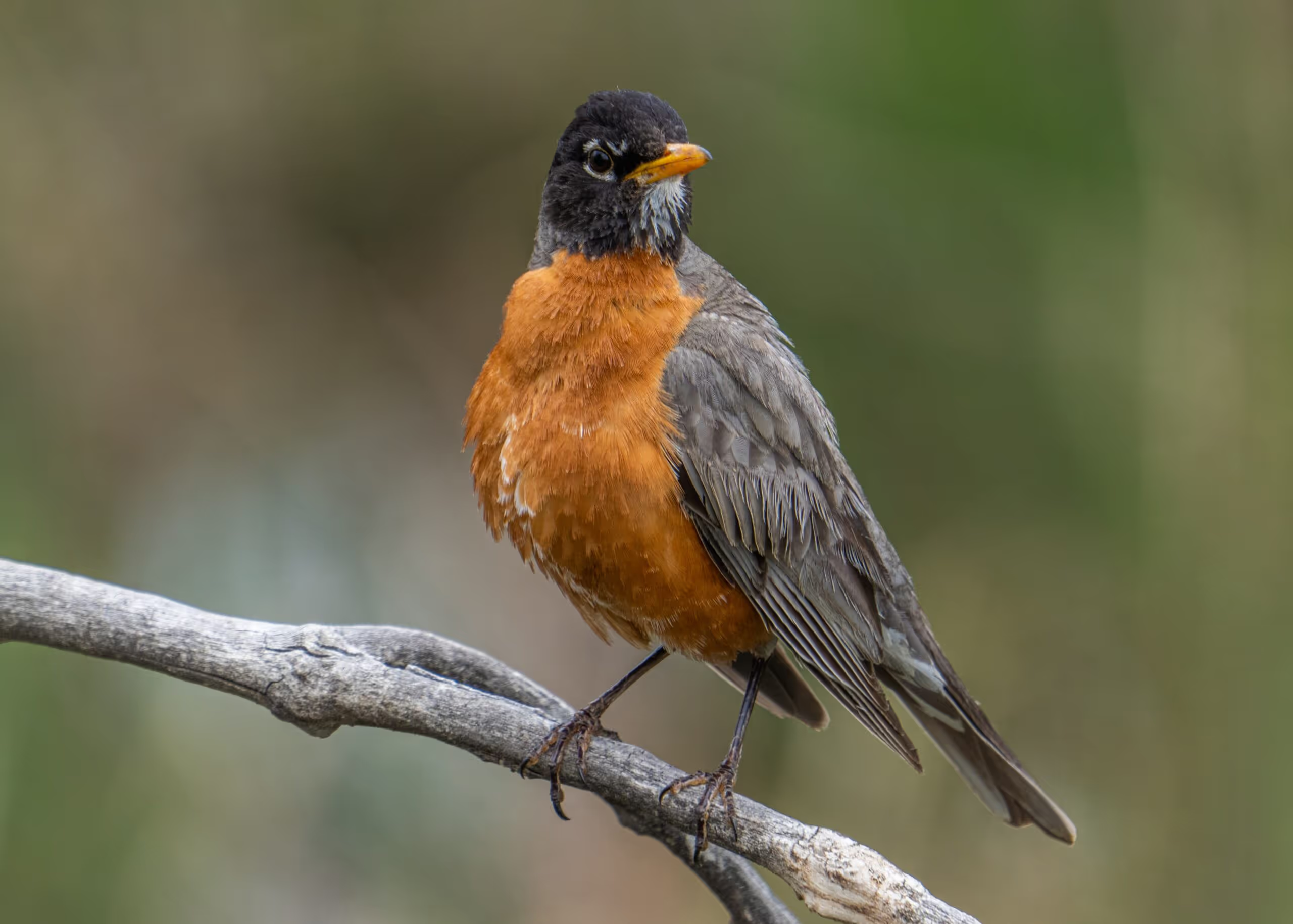
Short answer: No – robins behave very differently in the winter than they do in the spring, and their change in behavior may be why we think we see more of them in the springtime. In reality, robins are present all year long.
The American robin (Turdus migratorius) is a thrush, not to be confused with the English robin (Erithacus rubecula), which is part of the flycatcher family. The robins depicted in children’s stories, folklore, and fairytales are most often English robins.
Another misunderstanding about the robins is that its appearance is one of the first signs of spring.
The American robin is one of the most common birds in Washington State, inhabiting many different environments, including city parks, woodlands, marshes, and subalpine meadows. Robins are present all year long throughout most of North America. In many parts of Washington State, the robin is a common backyard bird and can often be seen searching for worms in lawns or perched on telephone wires.
During daylight hours throughout fall and winter, robins stick together in flocks and travel away from their roosting locations in trees, under bridges, and in other covered locations, and return to their roosts in the evening. Throughout the fall and winter, robins live and travel together in flocks with other types of birds, often popping up in large numbers around food sources.
During the colder seasons, a robin’s diet consists mostly of fruits and berries. While the English robin is depicted in fairytales and songs, its American namesake has a different claim to fame: the American robin can extend its esophagus, which enables it to store the berries that it harvested during the day for a midnight snack on cold nights.
Banding studies suggest that, from summer through winter, American robins are often on the move. Most robins will move at least 60 miles between seasons, and some have been tracked traveling thousands of miles throughout the continent.
Breeding season begins in the spring, which may be why it can seem like robins appear all of a sudden as spring is about to start. While they lived rather cooperatively throughout the fall and winter, the flocks of robins break up in the spring when they head out on their own before pairing off.
Pairs of robins will remain in a territory, usually running in size from one-third of an acre to many acres. The pair will spend most of their time in their territory, which the male will defend by dive bombing would-be intruders. They are even more protective of their nests once the young robins arrive.
In the spring and early summer, robins eat insects, earthworms, spiders, and other invertebrates with the occasional wild berry or fruit.
Robins have a distinct call, which can often be heard throughout the day, especially in the springtime “when their courtship song fills the air.”
Sources
Kaufman, Kenn. “Ask Kenn: Are American Robins Really a Sign of Spring,” Audubon: https://www.audubon.org/news/ask-kenn-are-american-robins-really-sign-spring. Accessed 26 February 2023.
“Living with Wildlife: Robins,” Washington Department of Fish and Wildlife: https://wdfw.wa.gov/sites/default/files/publications/00633/wdfw00633.pdf. Accessed 26 February 2023.
“A Tale of Two Robins,” The Nature Enthusiast: https://urbannature.blog/2021/04/30/who-is-the-real-robin/. Accessed 26 February 2023.
Photo by mana5280 on Unsplash.
© Holly Duffy, March 2023
Touch whale bones, examine shipwreck artifacts and connect with the coast's living history.

Support our mission, get involved in educational programs, or contribute through donations and volunteering.