Wildlife
Animals You Probably Won’t Find on the Washington Coast
The Washington Coast is home to a great variety of animals. However, there are a number of animals that are common and well-known throughout the United States that you are very unlikely to come across in this region.
Canada Lynx
Historically, Canada lynx (Lynx canadensis) ranged throughout northern Washington. Currently their population is limited to an estimated 50 individuals located in the North Cascades. They are found in subalpine and boreal forests above 4600 feet (WDFW n.d.-b).
If you think you’ve seen a lynx on the Washington coast, it was more likely their relative the bobcat (Lynx rufus), who are widespread throughout the state.
Moose
There are an estimated 5,000 moose (Alces alces) in Washington as of 2015 (WDFW n.d.-e). They are mostly found in the Selkirk Mountains in northeastern Washington with smaller populations in the North Cascades, Okanogan, and Blue Mountains. Moose have been documented outside of these areas, though. Last year, a moose was recorded in Mount Rainer National Park for the first time (Gendron 2022).
If you think you’ve seen a moose on the Washington Coast, it was more likely a Roosevelt elk (Cervus canadensis roosevelti). Roosevelt elk can be found in the coastal mountain ranges of the Olympic Peninsula and southwest Washington as well as the western slopes of the Cascades (WDFW n.d.-c). The Olympic National Park is home to the largest Roosevelt elk population in the world.
Gray Wolves
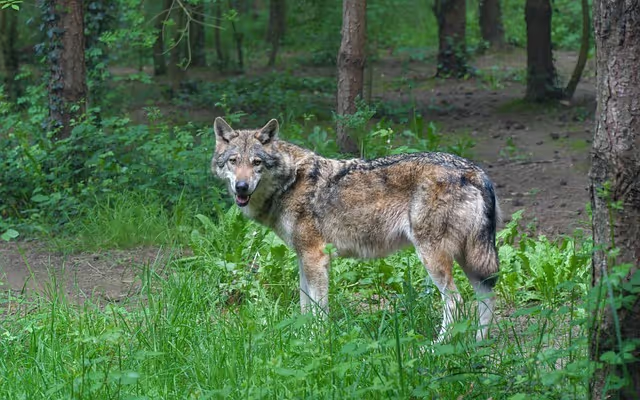
Gray wolves (Canis lupus) were once common throughout Washington, but were extirpated from the state in the early 1900s and their population is now limited to 216 known wolves (as of December 2022) located east of the Cascades. If you think you’ve seen a wolf on the Washington Coast, it was more likely a coyote.
That said, gray wolves are returning to Washington and their population is increasing. Just this year a new pack has been confirmed on the Yakima Reservation, a first for the South Cascades since extirpation (WDFW et al 2023).
Grizzly Bears
While grizzly bears (Ursus arctos horribilis) were once found throughout the state, they are extirpated from most of Washington and are considered an endangered species at the state level. Currently they are only found in the Selkirk Mountains and occasionally near the Canadian border in Stevens and Ferry counties (WDFW n.d.-d).
If you think you’ve seen a grizzly, it might instead be a black bear (Ursus americanus). Despite the name, black bears can be a variety of colors, including black, brown, blond, cinnamon, and rust (WDFW n.d.-a). They can be found throughout Washington.
Seahorses
Seahorses require warm water temperatures to thrive. The only seahorse species found along the western shores of the United States is the Pacific seahorse (Hippocampus ingens) and it has not been documented north of San Francisco (Cabrillo Marine Aquarium n.d.).
However, they do have a relative in the Pacific Northwest. Bay pipefish (Syngnathus leptorhynchus), which are in the same family (Syngnathidae) as seashores, can be found in eelgrass beds along the Pacific Coast from Baja California to Sitka, Alaska and in Puget Sound. They share some physical characteristics with seahorses, including the male being the one to incubate eggs (Fretwell and Starzomski 2014).
Sea Otters in the Rivers or Canals
Sea otters (Enhydra lutris) are marine species that are often found in kelp beds. Currently, in Washington they can only be found “south of Destruction Island north to Cape Flattery, and east to Pillar Point in the Strait of Juan de Fuca” (WDFW n.d.-f). However, their population is growing and their range is expected to expand as their growth continues (Larson et al 2020).
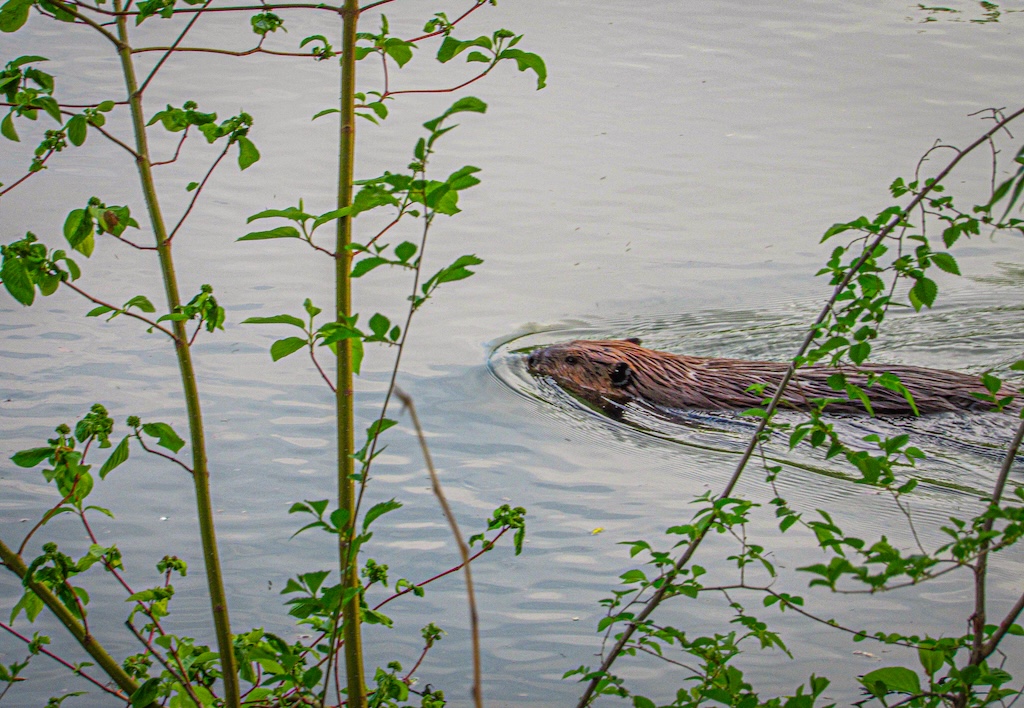
If you’ve seen an otter in a source of fresh water, you’ve probably seen a river otter. River otters (Lutra canadensis) can be found in both freshwater and marine environments.
Why Are These Species “Unlikely” to be Found on the Washington Coast
There are a number of reasons animals might appear outside of their known range. Sometimes the species in question might not be well studied and thus we do not have accurate knowledge of their range. Sometimes humans or an animal native to an area will introduce a non-native species, who will then take up residence in the new area (as was the case with many invasive species, such as the European green crab). Climate change is causing many species to alter their range as either they or their food sources no longer find their historic range habitable. And sometimes animals will stray from their usual range with no obvious reason for doing so.
In short, just because these animals cannot be found on the coast now does not mean they’ve never lived here before and they’ll never make an appearance here. But when trying to ID a species whose presence would be rare or unheard of in a particular area, it is important to rule out the more likely possibilities first.
References
Cabrillo Marine Aquarium. (n.d.). Pacific Seahorse. Cabrillo Marine Aquarium. https://www.cabrillomarineaquarium.org/exhibits/socal-species-details.asp?id=81
Fretwell, K., & Starzomski, B. (2014). Bay pipefish . Biodiversity of the Central Coast. https://www.centralcoastbiodiversity.org/bay-pipefish-bull-syngnathus-leptorhynchus.html
Gendron, J. (2022, December 12). Rare moose sighting in southwestern WA raises questions. Experts explain what it means. The News Tribune. https://www.thenewstribune.com/outdoors/article269830472.html
Larson, S., Burdin , A., & Doroff , A. (2020, January 21). Sea Otter. IUCN Red List of Threatened Species. https://www.iucnredlist.org/species/7750/219377647
Monterey Bay Aquarium. (n.d.). Bay pipefish. Monterey Bay Aquarium. https://www.montereybayaquarium.org/animals/animals-a-to-z/bay-pipefish
Washington Department of Fish & Wildlife. (n.d.-a). Black Bear. Washington Department of Fish & Wildlife. https://wdfw.wa.gov/species-habitats/species/ursus-americanus
Washington Department of Fish & Wildlife. (n.d.-b). Canada lynx. Washington Department of Fish & Wildlife. https://wdfw.wa.gov/species-habitats/species/lynx-canadensis
Washington Department of Fish & Wildlife. (n.d.-c). Elk. Washington Department of Fish & Wildlife. https://wdfw.wa.gov/species-habitats/species/cervus-canadensis
Washington Department of Fish & Wildlife. (n.d.-d). Grizzly Bear. Washington Department of Fish & Wildlife. https://wdfw.wa.gov/species-habitats/species/ursus-arctos
Washington Department of Fish & Wildlife. (n.d.-e). Moose. Washington Department of Fish & Wildlife. https://wdfw.wa.gov/species-habitats/species/alces-alces
Washington Department of Fish & Wildlife. (n.d.-f). Sea otter. Washington Department of Fish & Wildlife. https://wdfw.wa.gov/species-habitats/species/enhydra-lutris-kenyoni
Washington Department of Fish and Wildlife, Confederated Tribes of the Colville Reservation, Spokane Tribe of Indians, Yakama Nation, Swinomish Tribe, and U.S. Fish and Wildlife Service. 2023. Washington Gray Wolf Conservation and Management 2022 Annual Report. Washington Department of Fish and Wildlife, Ellensburg, WA, USA. https://wdfw.wa.gov/publications/02419
© Laura Caldwell, August 2023
Touch whale bones, examine shipwreck artifacts and connect with the coast's living history.

Support our mission, get involved in educational programs, or contribute through donations and volunteering.