Geology
All About Petrified Wood
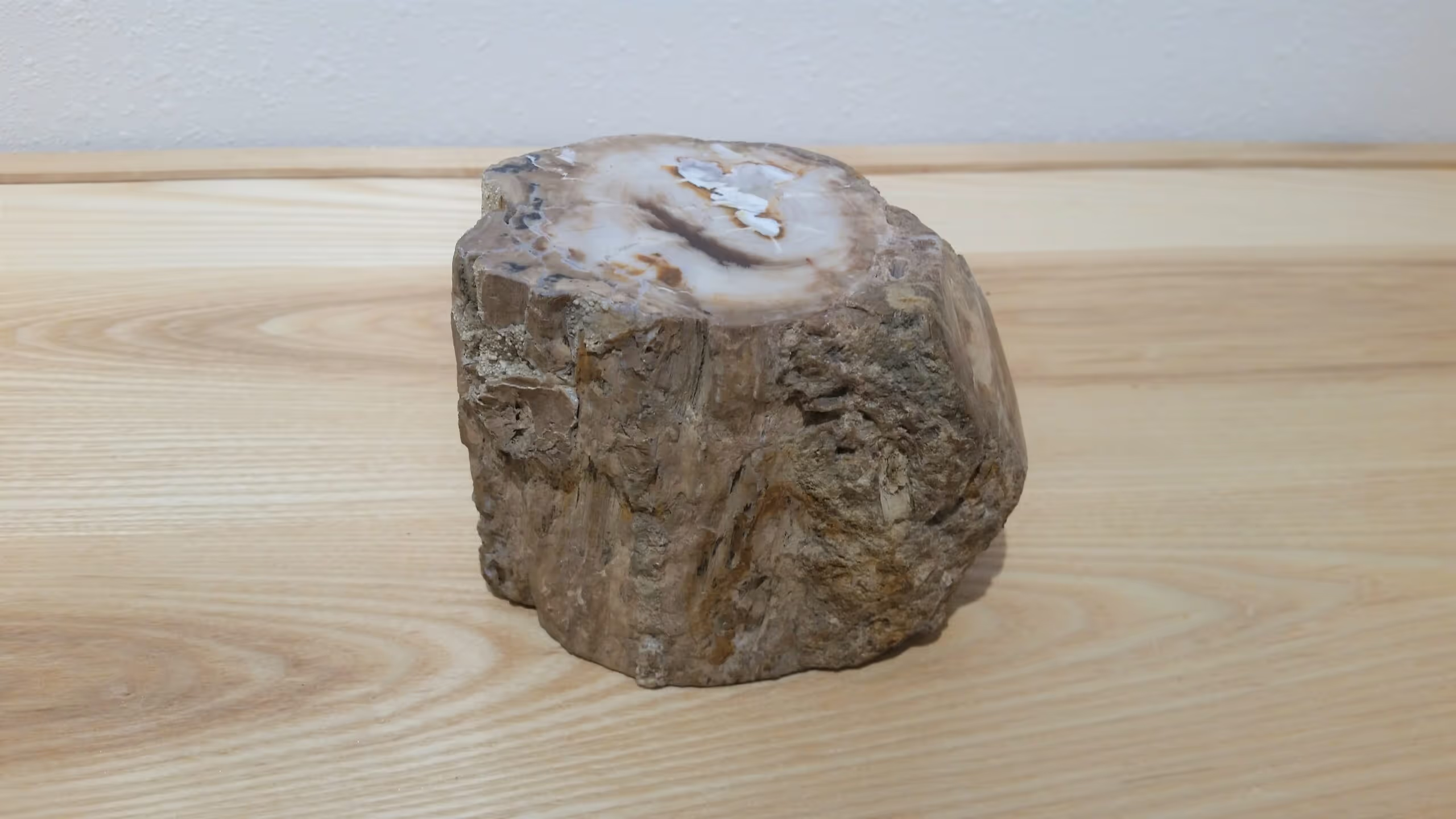
Petrified wood is one of the many wonderful treasures that you can find on the beaches here in Ocean Shores and in many other places worldwide. It is a very special kind of wood that is formed through a fossilization process that spans thousands of years. It is well known for the beautiful natural colors that it displays, its density, and its stone-like feel. Petrified wood was proclaimed as Washington's official state gem in 1975 (4).
How Petrified Wood Formed in the Pacific Northwest
Approximately seventeen million years ago, lava began pouring out of fissures (also known as cracks) in Earth’s crust at a number of locations across the Pacific Northwest. It spread to many corners of the region, including large areas of Washington State. These lava floods continued regularly for at least eleven million years (6). The floods were slow-moving, traveling at a mere three miles per hour. Because trees can't move on their own, they weren't able to escape the lava floods (6). Deceased trees in lakes and wetlands became engulfed in hot lava. Once the lava cooled, it formed casts around the trees that featured all of the details of the wood grain. As time went on, the decomposed wood was replaced with minerals of many colors (6). Some of the minerals that often made up the new composition of the wood include opal, silica, pyrite, and calcite (2). The minerals preserved the wood's original structures and texture (1).
Texture, Age, and Color
Some pieces of petrified wood have been preserved so accurately that people don't realize they are fossils until they pick them up. Petrified wood is dense, and takes on a stone-like feel (2), which surprises many who are expecting it to feel like wood. The majority of petrified wood on Earth is believed to be anywhere from 65 to 570 million years old. It is possible to find pieces that aren't as old, as some petrified wood also formed in the Cenozoic Era, which began 65 million years ago and continues to this day (1).
Petrified wood comes in a wide array of colors. The colors are the result of the different elements or compounds within the material. For example, if a piece of petrified wood is pink or orange, it likely has small amounts of manganese in it. However, if a piece is green, it may contain cobalt, iron, copper, or chromium (1). While most petrified wood is a single color, petrified wood from Arizona is known to be multicolored. The reason for this is due to iron being oxidized at different states, which is the primary coloring element for petrified wood samples in that state (1).
Identifying Petrified Wood
Here are a few tips to help you identify petrified wood.
Where to Find Petrified Wood
If you want to see petrified wood in person, you're in luck, as a piece or two can sometimes be found at Damon Point here in Ocean Shores (5). If you can't find any on our local beaches, I would recommend taking a trip to Ginkgo Petrified Forest State Park in Central Washington. The park is world renowned for its rare specimens of petrified Ginkgo tree, which were discovered in 1932. There are many indoor and outdoor exhibits of petrified wood at the park, with more than 30 varieties on display (3). Additionally, the nearby Trees of Stone Interpretive Trail features more than twenty petrified logs on display in their original settings (3). I visited this trail in 2020 and found it to be fascinating, but also very steep (don't go if you're not up for a climb).
Other places that feature petrified wood in the United States include the aptly named Petrified Forest National Park in northeastern Arizona, as well as various sites in Oregon, Texas, California, Colorado, Louisiana, Mississippi, and South Dakota (1). Globally, petrified wood can be found in a wide array of countries, including India, Egypt, Australia, Canada, Brazil, and China (1). Most of these locations feature unique pieces that are not seen in other areas, making each visit to a site with petrified wood a real treat.
References
1. https://www.gemstones.com/articles/gemstone-petrified-wood
2. https://geology.com/stories/13/petrified-wood/
5. https://agatehunting.com/winter-agate-hunt-at-damon-point-in-ocean-shores-washington/
6. https://visitthereach.us/education/geologic-past/geologic-past-tri-cities-rocks/
© Ian D. Caldwell, November 2022
Touch whale bones, examine shipwreck artifacts and connect with the coast's living history.

Support our mission, get involved in educational programs, or contribute through donations and volunteering.