Botany
A Nod to The Nodding Onion
Ohhhhh, that’s SO cute!
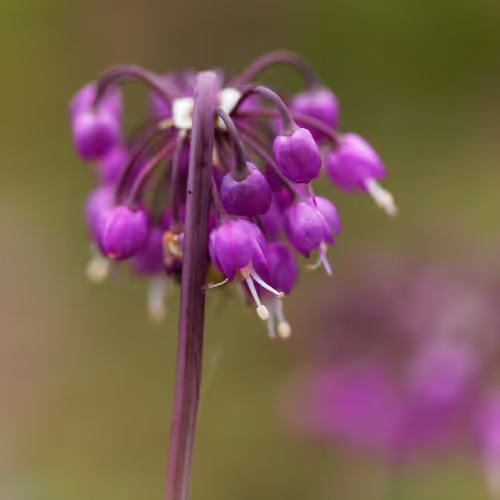
Many of us just puddle when we hear those words. We look at once to see the object of adoration. For me, it was a Nodding Onion or Allium cernuum to the botanist and native plant addicts. It certainly was cute and beautiful, and the memory still makes my heart melt.
Wondering how a person can get jazzed by an onion? Well, it isn’t an onion at all! And, at the right time of the year, you can see some at the Coastal Interpretive Center.
If it’s not an onion, what else can a Nodding Onion be? Think of another group of plants resembling onions? If you said “lilies,” you’re correct! The Nodding Onion is a member of the lily family. It probably got its name due to the strong onion scent of the leaves and bulbs.
In the spring, the perennial underground bulb grows several linear or grass-like leaves. Later, one 18-20” tall leafless flower-bearing stem appears. In early to mid-summer, many pink to rosy-purple downward facing flowers grow in an umbrella-shaped cluster called an “umbel.” Fruits with three sides follow, drying to release seeds. Each year little bulbs develop round the bulb to increase the clump size with more flowers. In the winter, the leaves disappear to reappear the following spring.
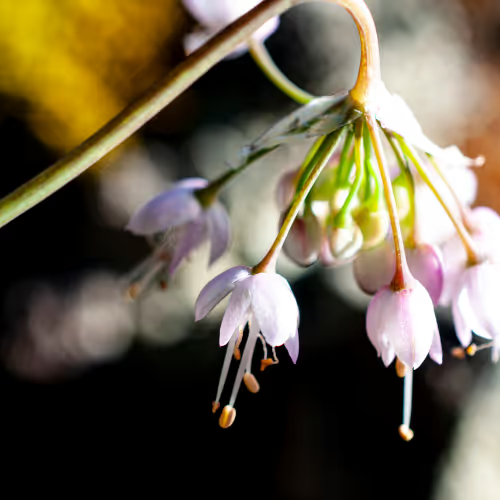
Native in all but a few states of the United States and much of Canada, Nodding Onions grow in many types of locations including open woodlands, sunny grassy areas, and rocky crevices. Its main requirements are sun, good drainage, adequate moisture and neutral to slightly alkaline rich soil. Often, they grow near Douglas firs.
Yes, the Nodding Onion, also called the Wild Onion, Wild Garlic or Lady’s Leek, is edible. The chopped leaves and the bulbs have a stronger taste than the regular grocery store onions. As a perennial, it doesn’t require annual replanting as most onions do.
However, if you’re a forager wanting to “live off the land” be careful. While many Native Americans ate the wild Nodding Onion, the death-camas plant (Toxicoscordion venenosum) looks a lot like the Nodding Onion. This plant doesn’t have the onion odor and there is a reason for this plant’s name.

If you’re planting a garden in Ocean Shores and thinking of including native plants, give some consideration to the Nodding Onion. They’re available from several online nurseries. If you plant several, in a few years you’ll have a nice clump. As it easily self-seeds, you may want to remove the flowers before going to seed, or you’ll have Nodding Onions throughout your garden!
The native wildlife will thank you. Ground squirrels and bears will possibly eat some of the bulbs if unprotected. The deer will graze the early spring leaves and the flowers will attract butterflies, native bees and wasps and hummingbirds. Try planting them in naturalistic drifts along with other natives amid rocks and small shrubs and you may be rewarded with your garden visitors reacting as I did, “Ohhhhh, that’s SO cute!”
© Jacqui Austin, November 2020
Touch whale bones, examine shipwreck artifacts and connect with the coast's living history.

Support our mission, get involved in educational programs, or contribute through donations and volunteering.